Public Safety
Public Safety (2012)
Installation and 24h Performance
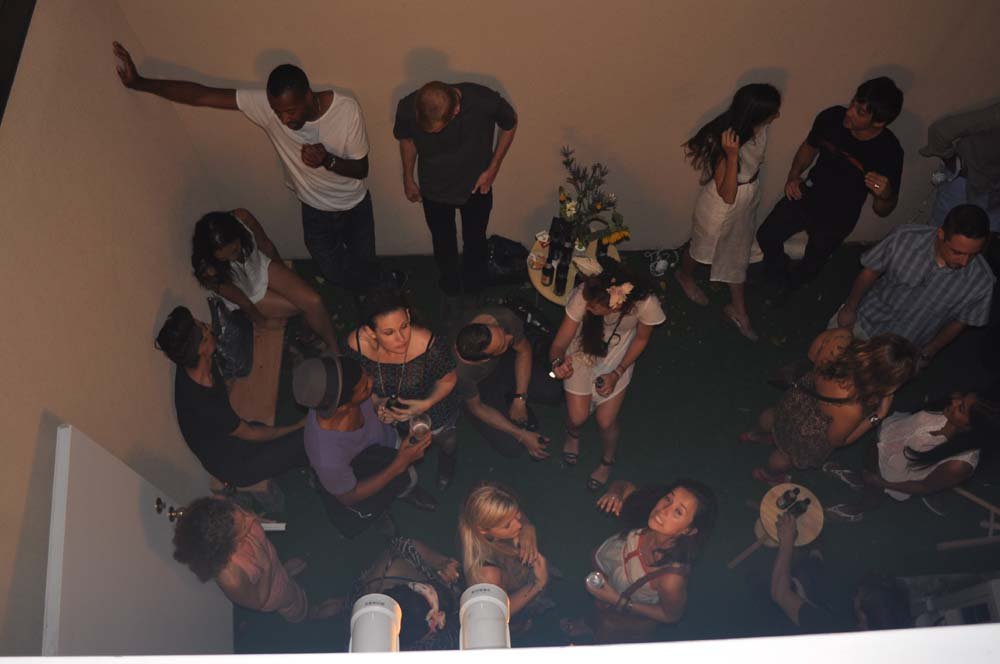
The title, Public Safety, references a speech by former mayor Michael Bloomberg during the Occupy Wall Street protest in 2011. The term 'public safety' was used in that speech to justify Bloomberg’s decision to evacuate protestors from Manhattan’s Zuccotti Park forcibly, the triumph of regulation over expression in the name of the safety of an undefined 'public' body. We were visiting New York at the time and just beginning the process of becoming "legal aliens", our own small battlefield of attempting to explain expression to a regulatory body. For us, this term became a manifestation of how the notion of a public itself can become a weapon against that same public’s own expression, becoming, in effect, its own autoimmune disorder. What "public" was the mayor referring to? What would be its "safety"? Almost a year later, the act of opening the door of Glasshouse in New York, and the invitation to enter extended to "the public", was a cautious, conscious offering. We chose to open on a Labor Day weekend Saturday evening.
We formulated two acts intended for hosting (a) community.
The first act was our way to introduce the Glasshouse architectural principle and environment through 8 performance mechanisms. We invited facilitators to operate these and perform the potential of one-to-one participation: personal, intimate engagement within a crowded space. There were no instructions. The device itself, operated by each facilitator, was self-explanatory. The action served as a gesture, an invitation. Each piece was based on previous works we had made, now monumentalized into a mechanism, an operating system. Its components were as follows.
The upper floor at Glasshouse presented three sculptural proposals for participation:
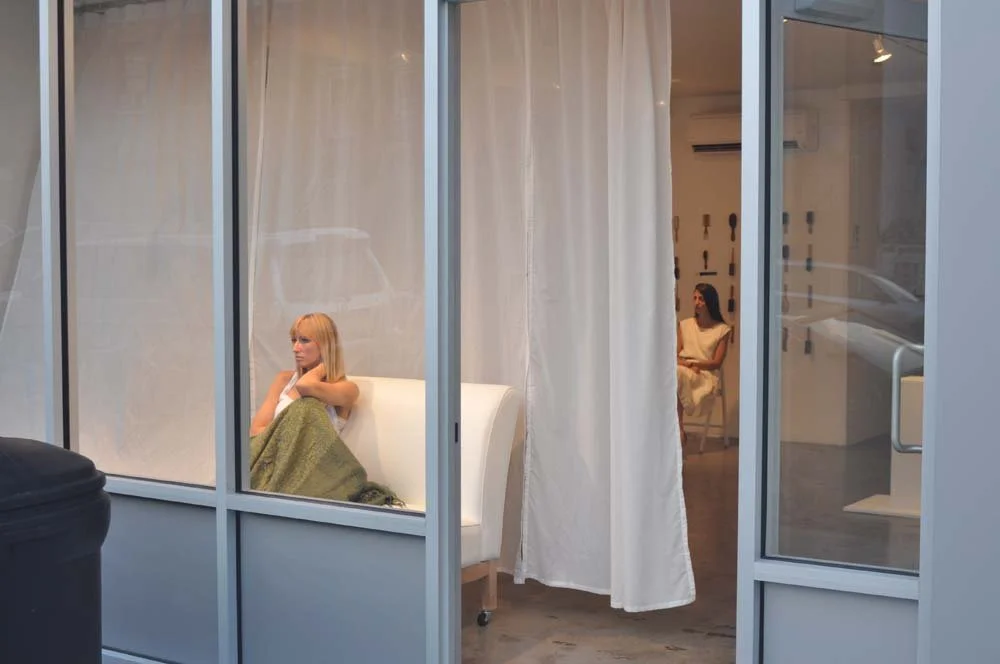

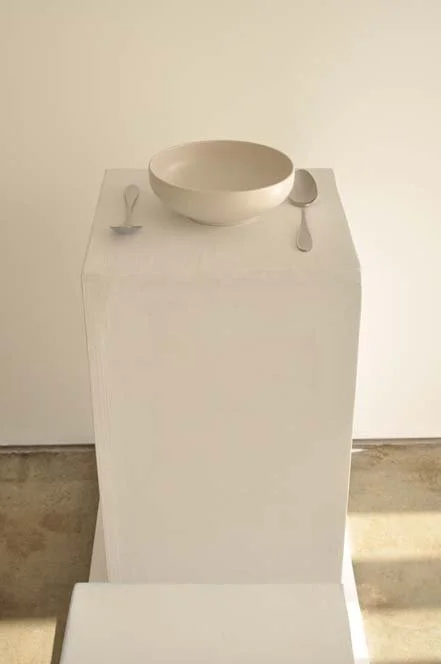
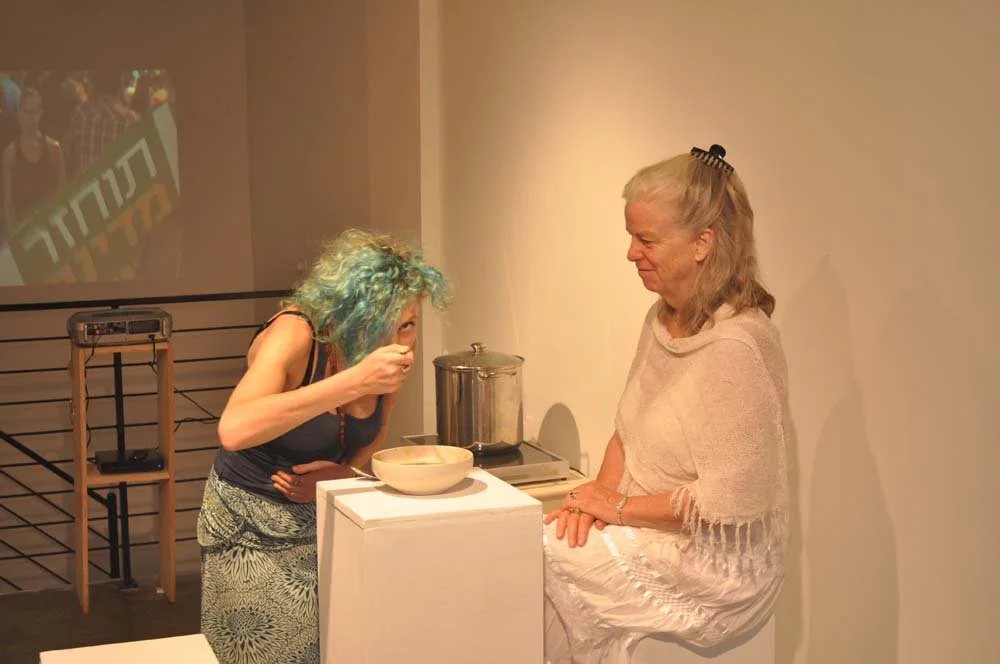
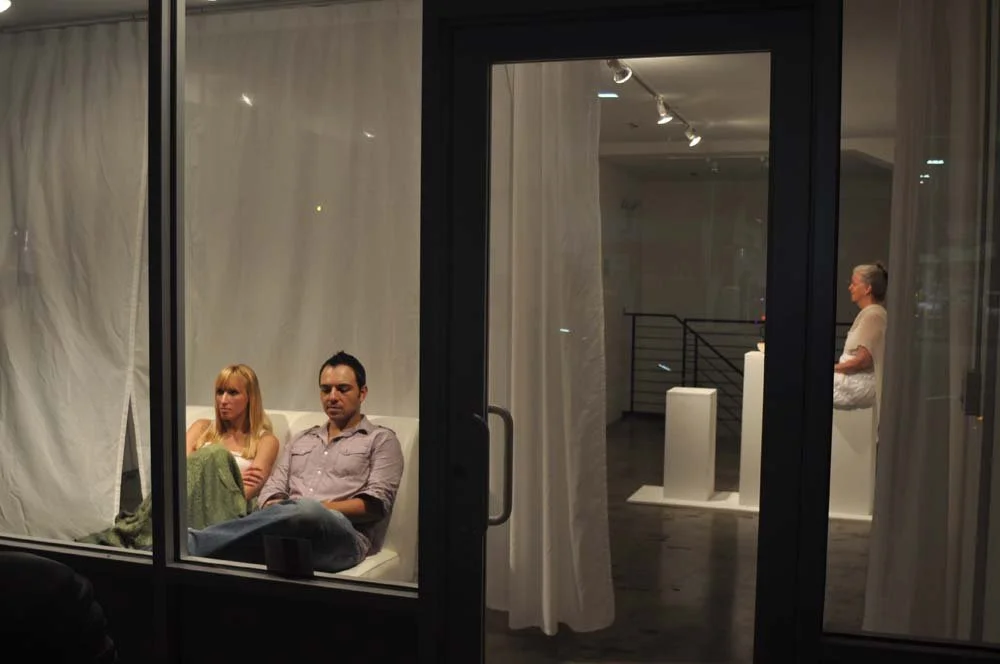
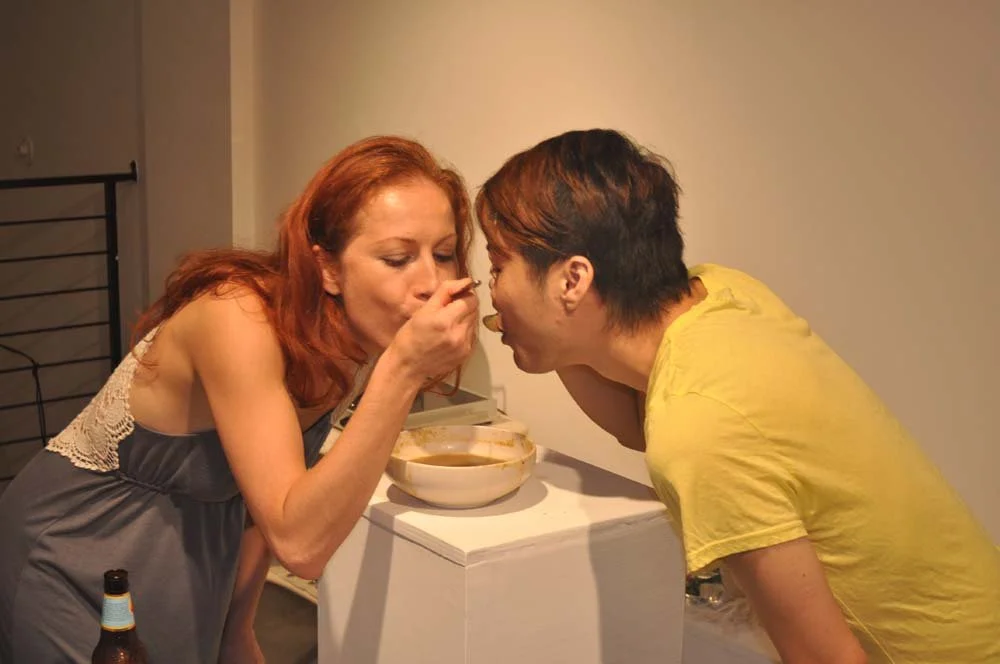
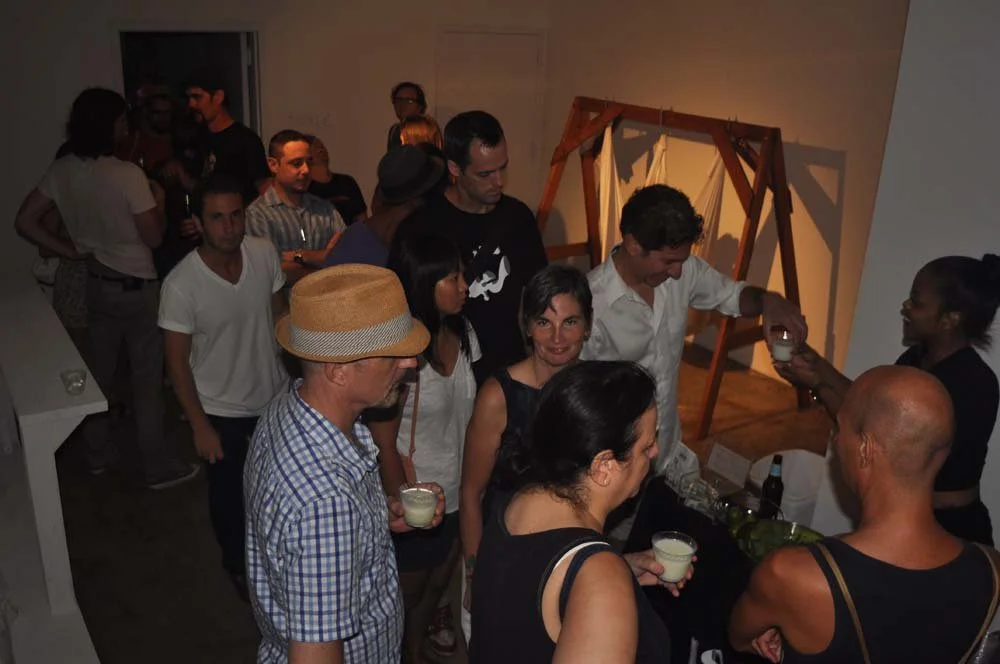
By the door, a young woman sitting on a white coach in front of Glasshouse's storefront window welcomed attendees with an outward gaze, observing the street (Coach Potato). A large pot of soup placed on a table at the far end of the room welcomed the audience with its aroma. Three white pedestals are positioned in a row in front of it. One served as a stool for a seated woman; the second was a table displaying a bowl of soup with two spoons; the third was empty, serving as an offering to share soup. When the bowl emptied, the woman would refill it, replace the spoons, and return to sit (Have Some Soup).
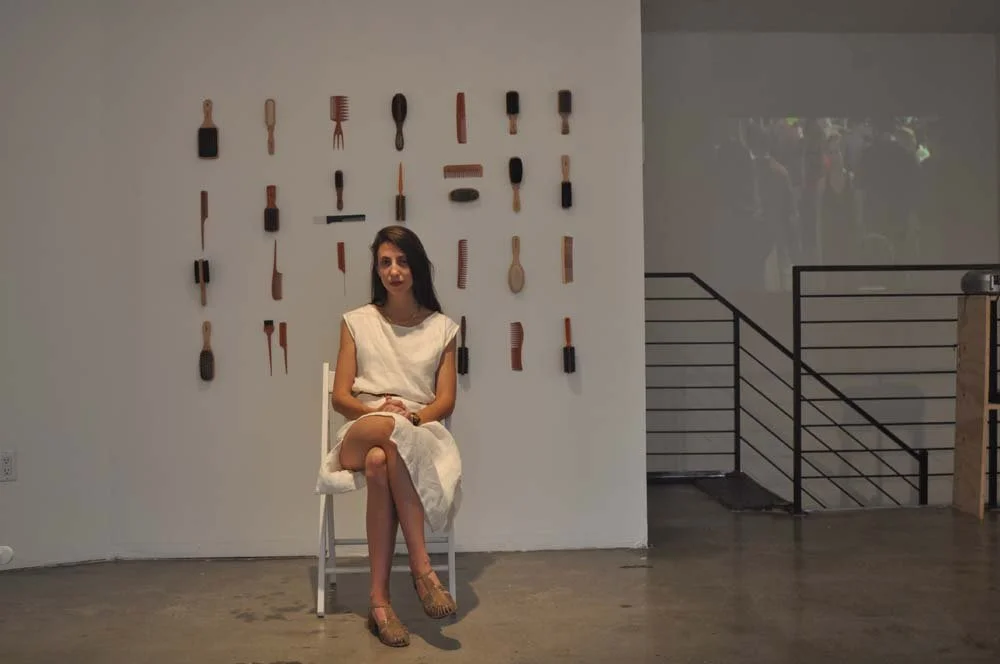
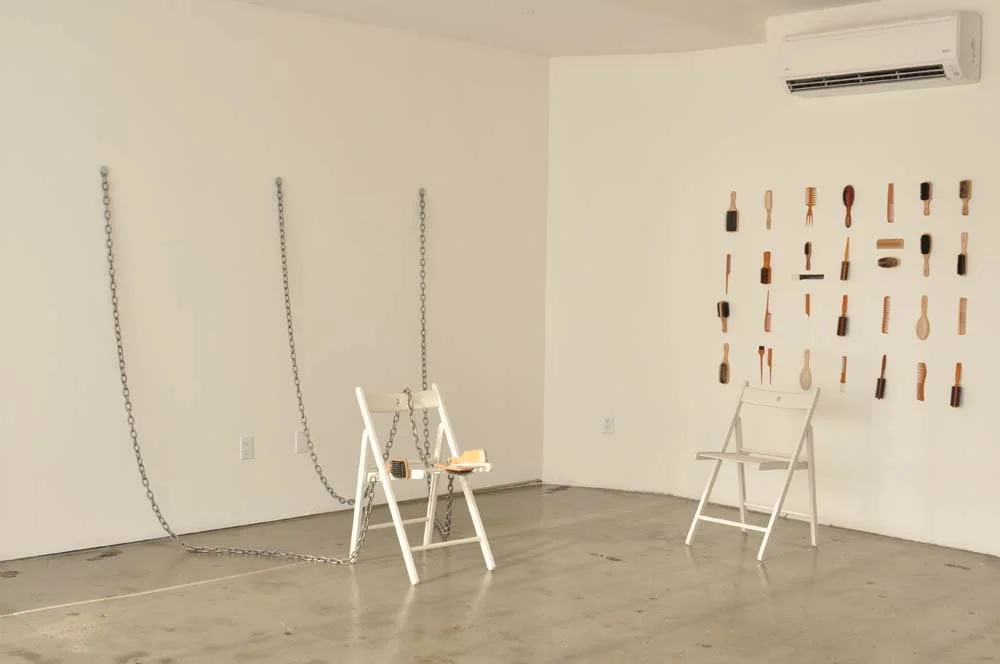
31 Hair brushes of different sizes and functions were hung on the far end wall of the gallery. A chair positioned in front of it functioned as the gesture - sitting on the chair your hair was to be carefully combed by a facilitator using one of the brushes on the wall (Comb My Hair). There were no explanations, but conversations happened.
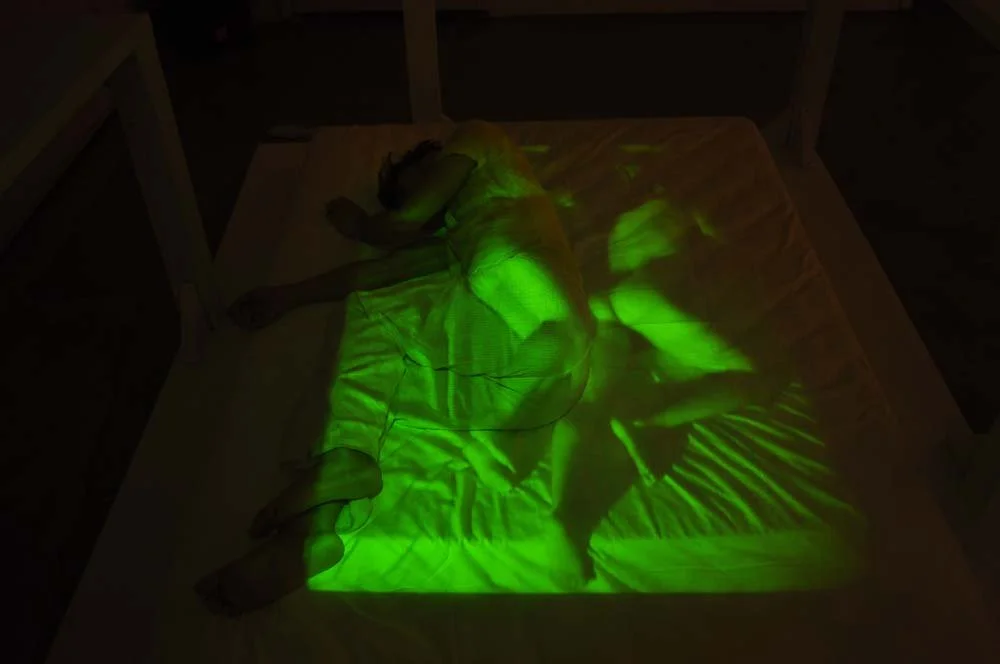
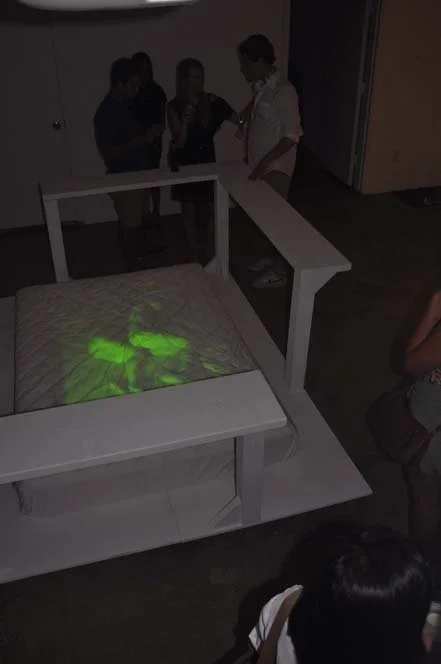
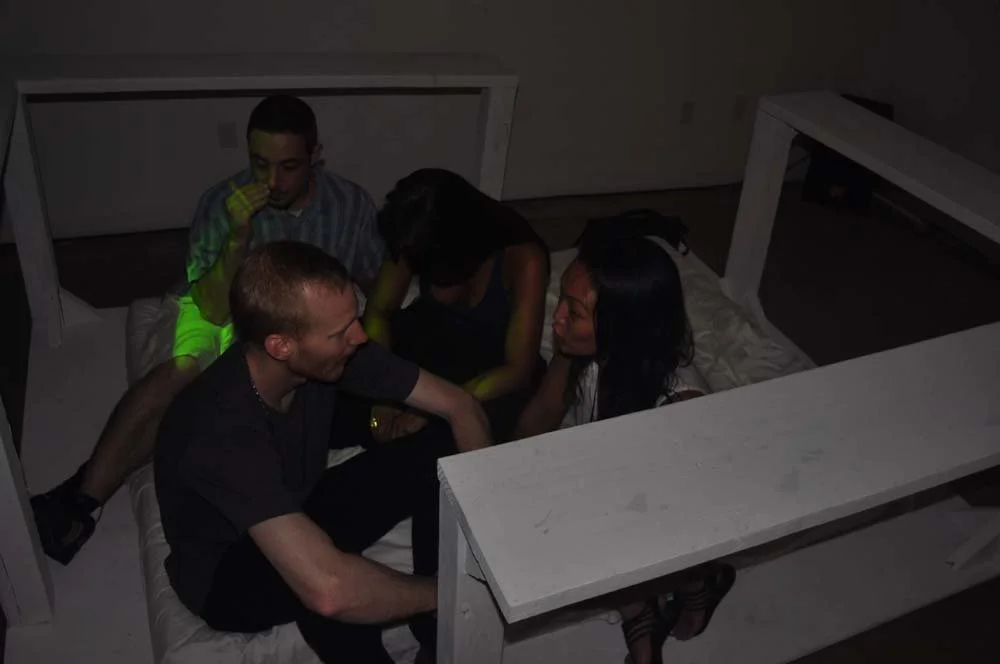
On the bottom floor was a video sculpture which served as both a bar counter for the audience to gather around and a bed for whoever entered the structure. A young man rested in the center of the bed, a video of a couple sleeping covered him like a blanket (Sleeping Surround).
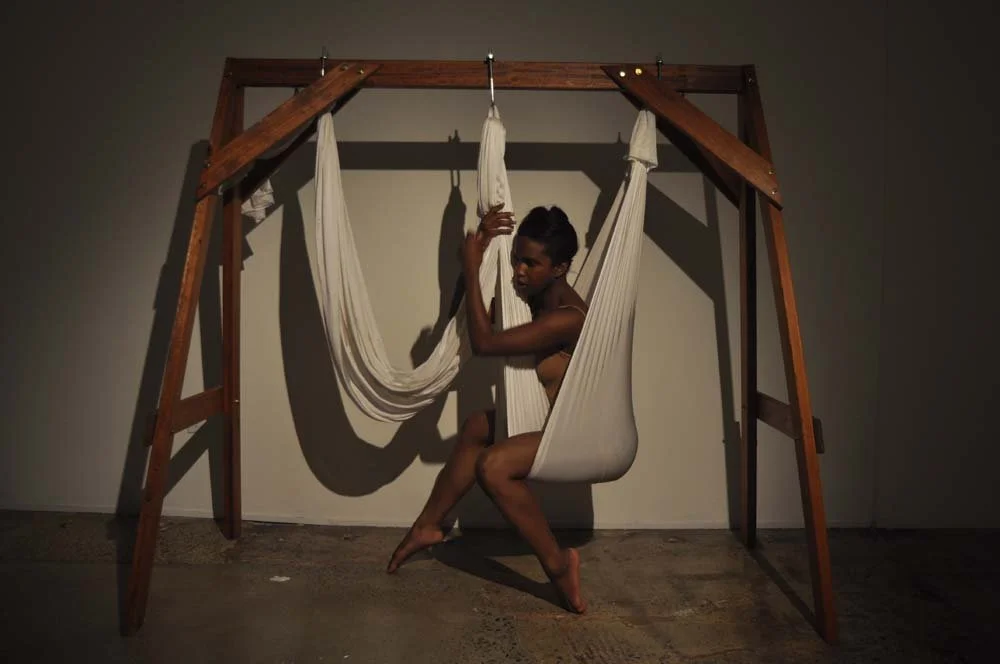
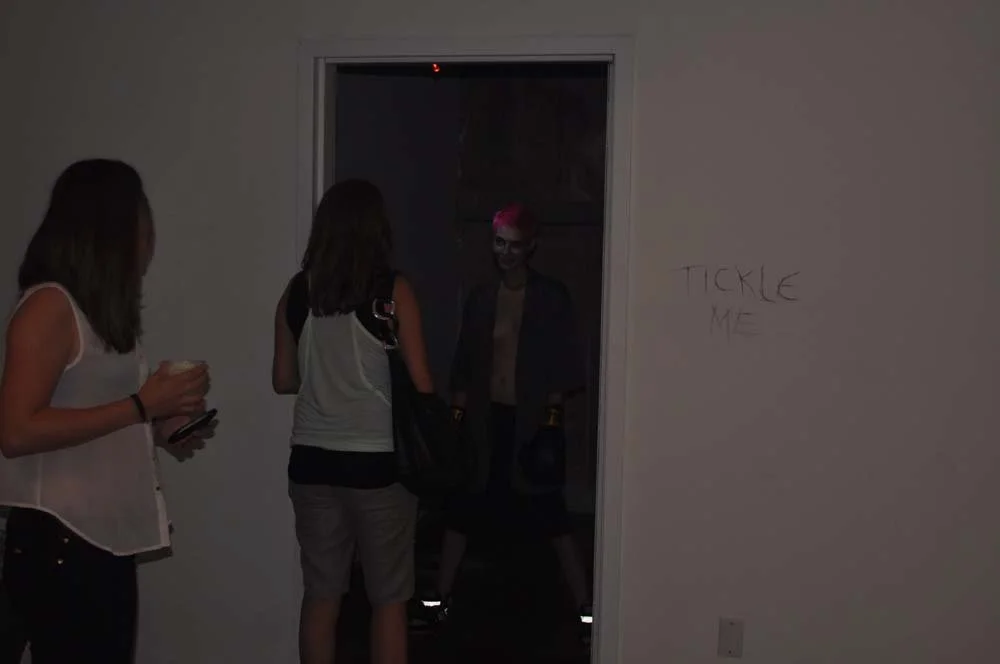
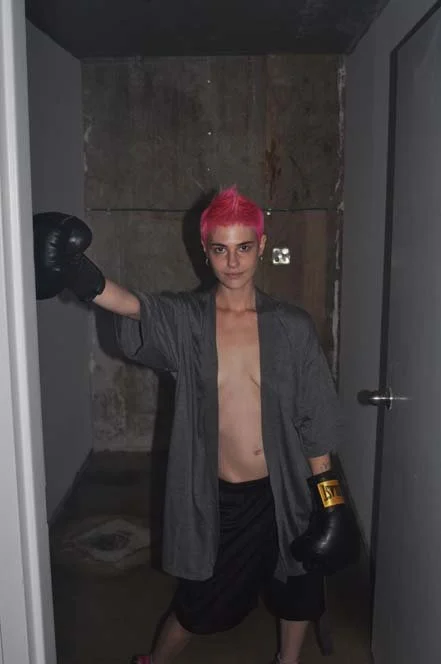
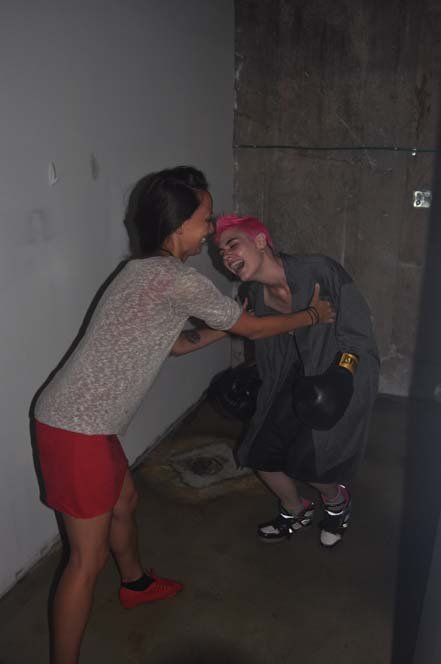
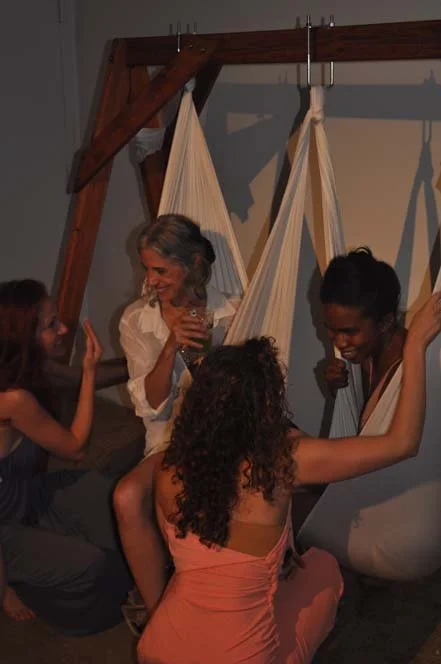
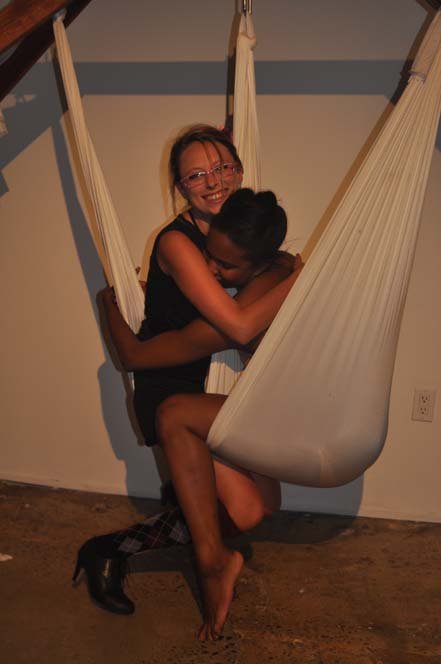
Across the room, a device for suspended hugging (Hugging Device). The text 'Tickle Me' was scraped onto a wall as a scar, with a woman standing in a tiny room beside it. She wears boxing gloves (Tickle Me).
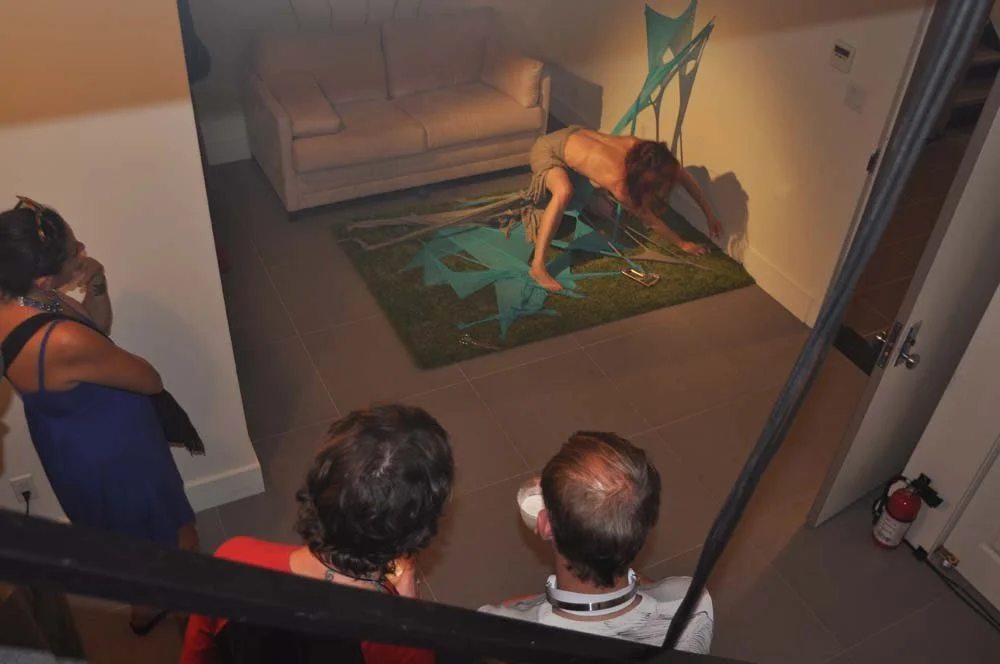
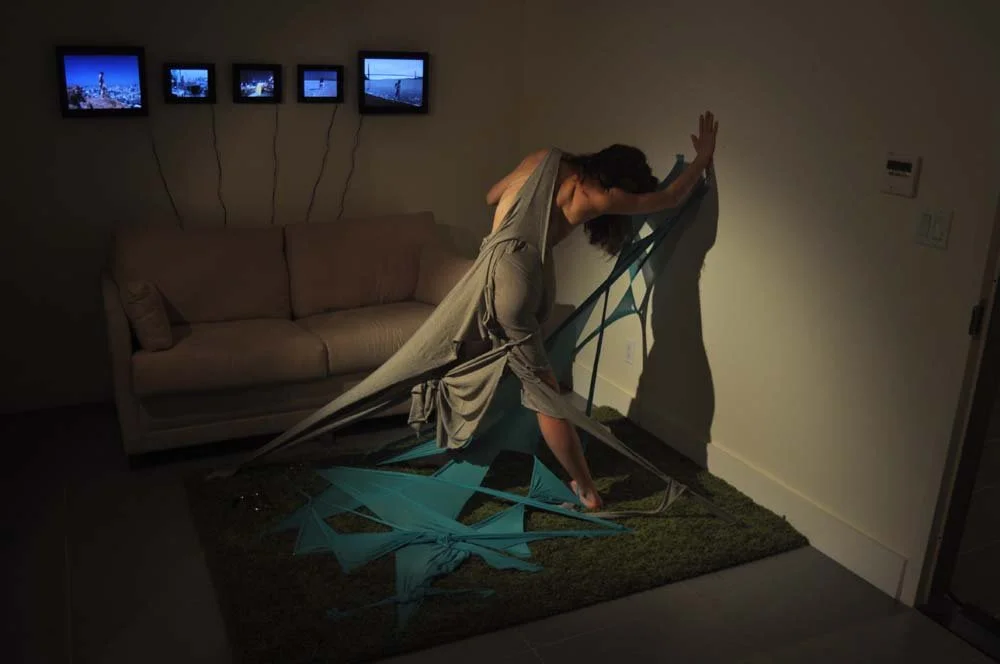
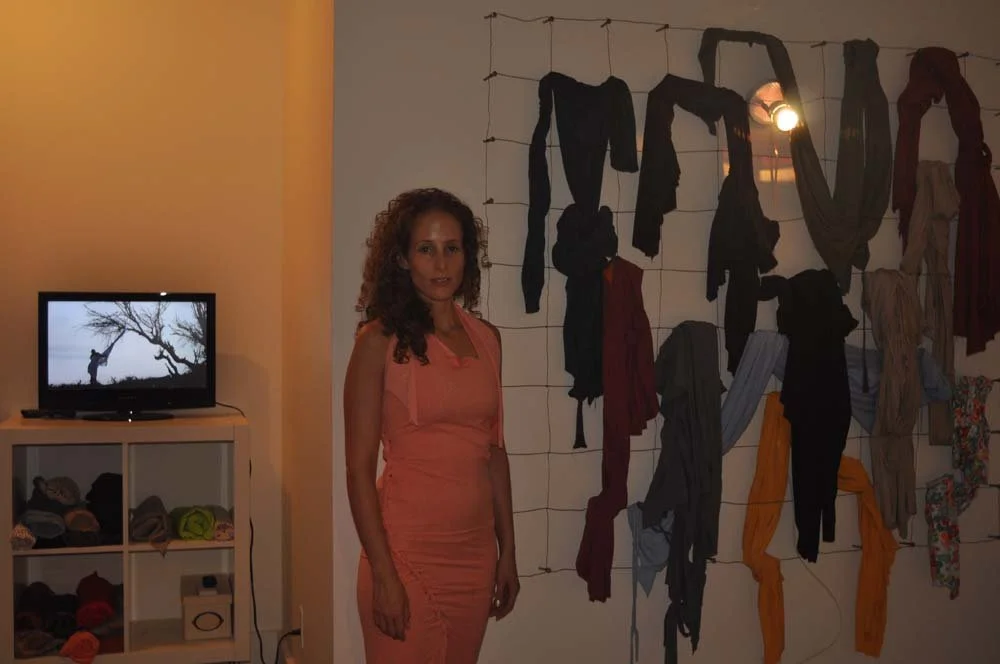
Once one crosses the bridge of "public space" between the two discrete parts of the Glasshouse structure, they reach the "residential" part. It looks like an apartment but serves as a ground for various installations, each space dedicated to a different aspect of performance or its objectification. The first room is devoted to Lital's daily dressmaking practice (Transformations). Rolls of fabric inserted through a grid of wires serve as her closet. Video monitors display the process of making them outdoors. A woman wears a dress that is stapled to the wall. She stretches the fabric to its limits, staples her movement (Stretched Limits).
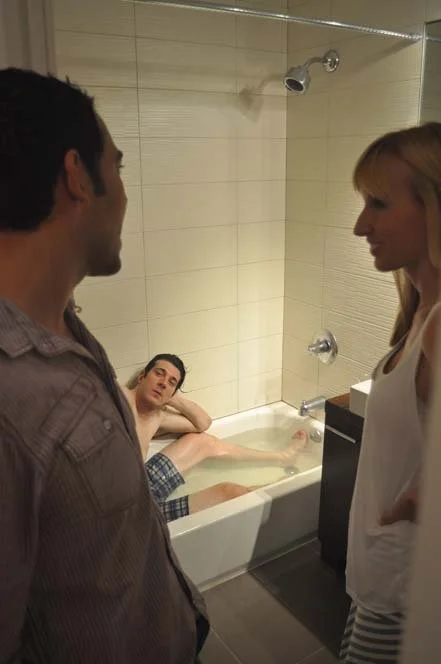
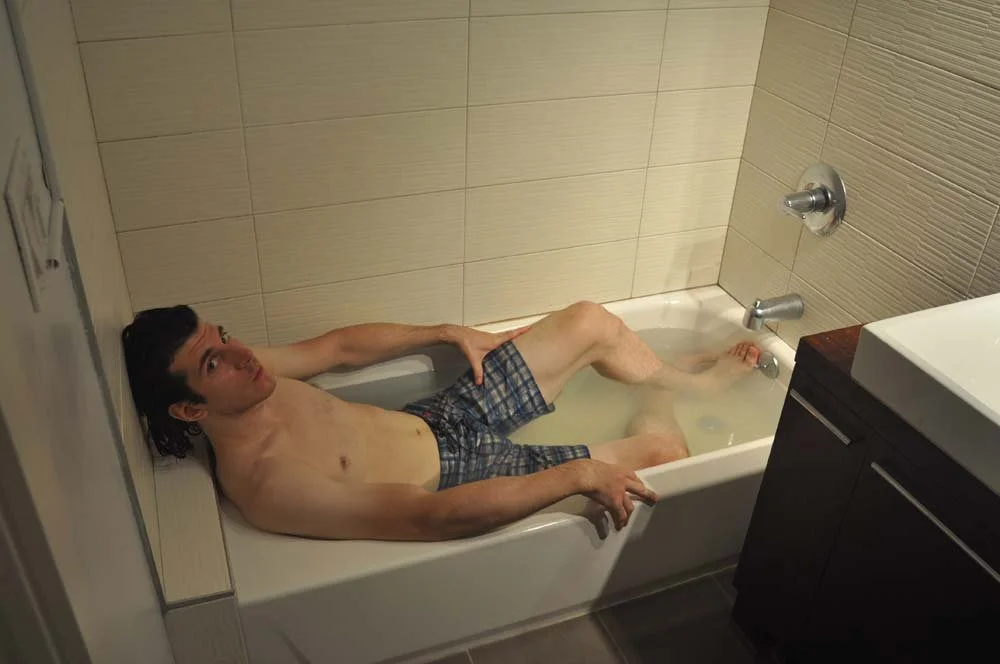
We chose to locate the video and photography exhibition of 'Public Safety' in the threshold space between the bedroom and the kitchen, each of which was transformed into an installation. By the exit door, soaking in the bath, is a young man, ready to engage in a conversation (Ms. Understanding).
The second act was a 24-hour performance the following week.

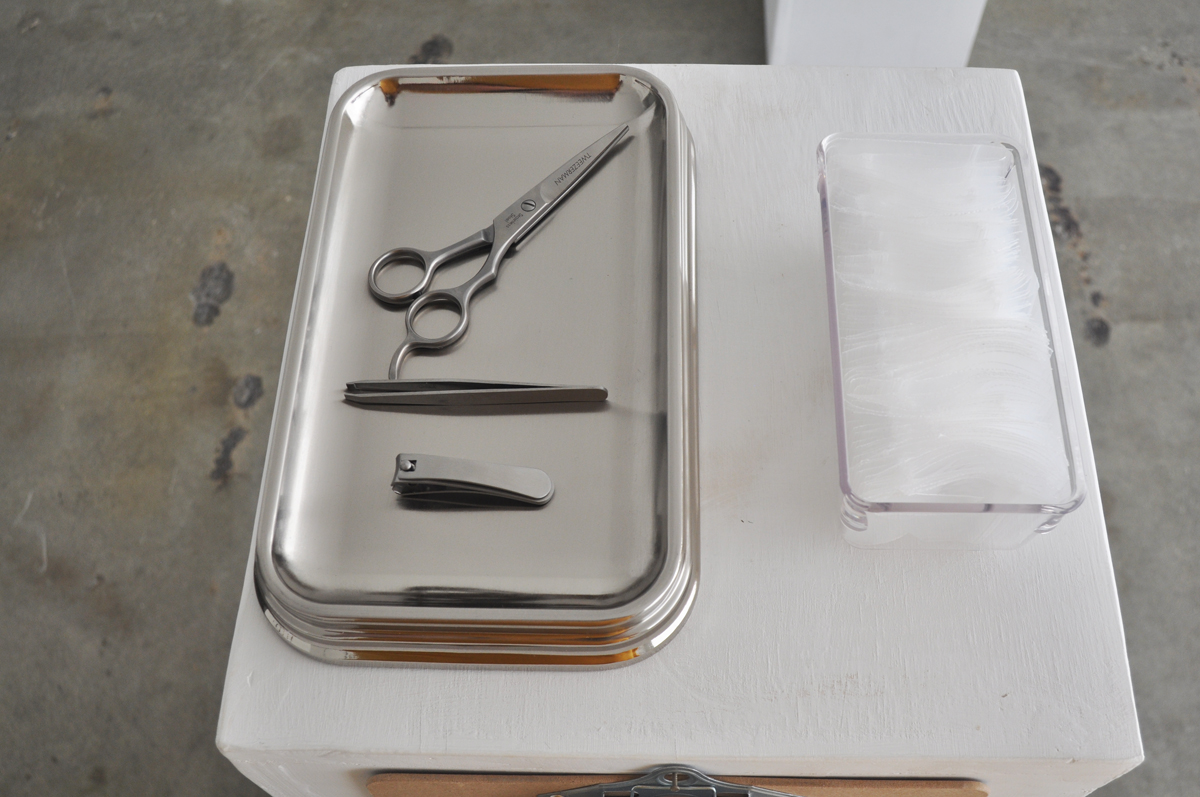


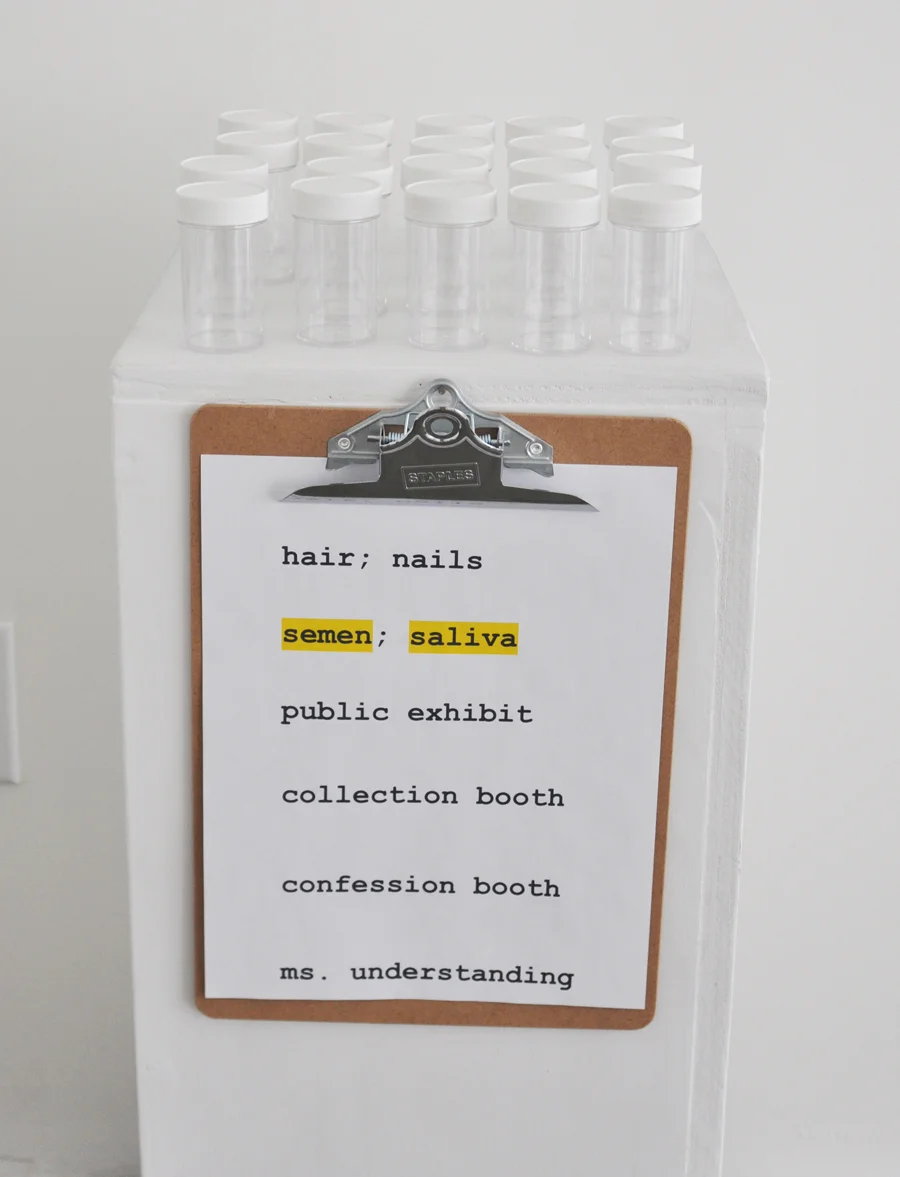

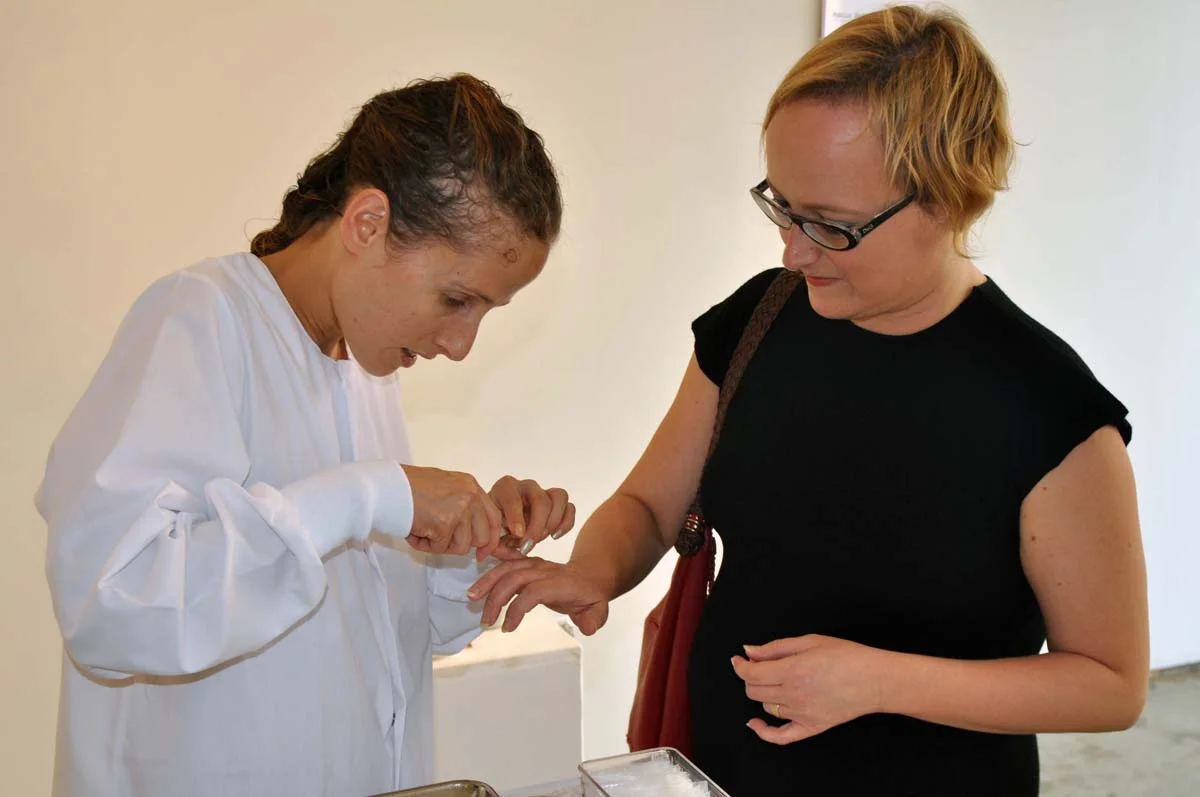

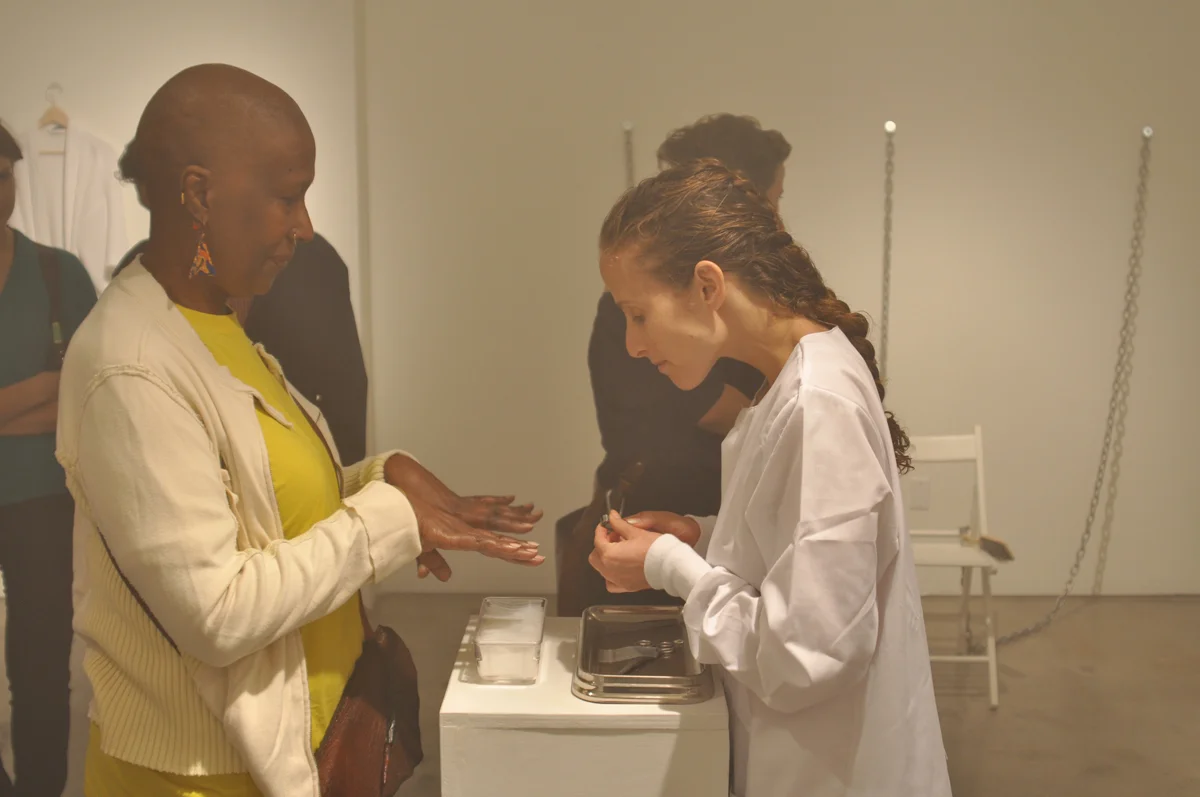

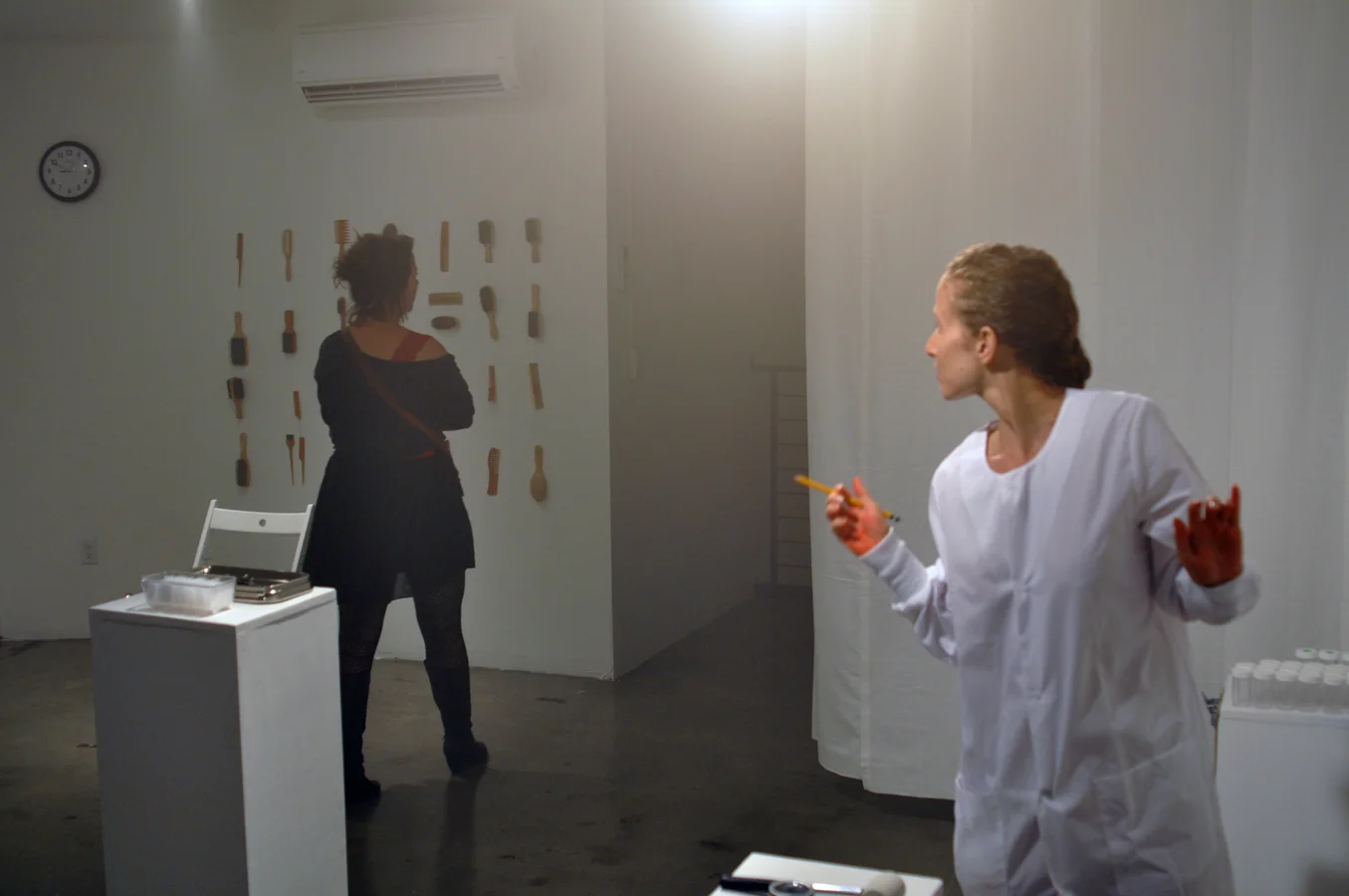


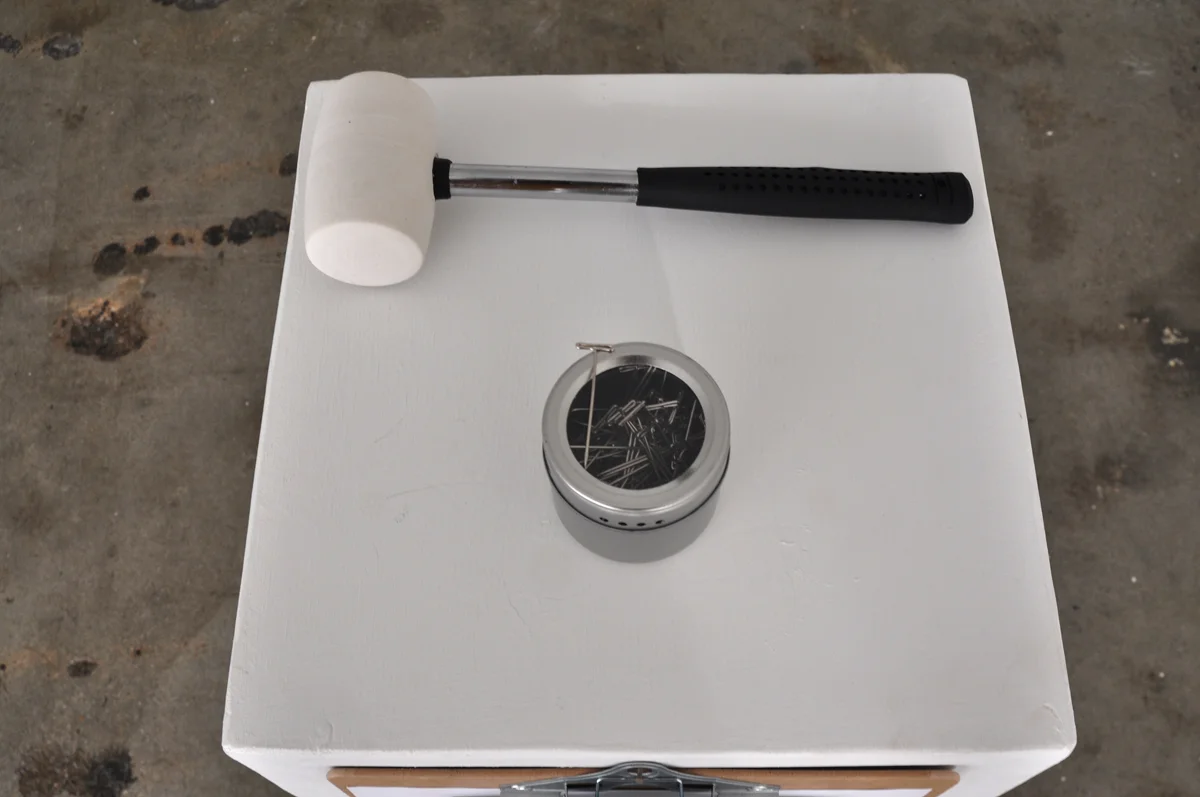


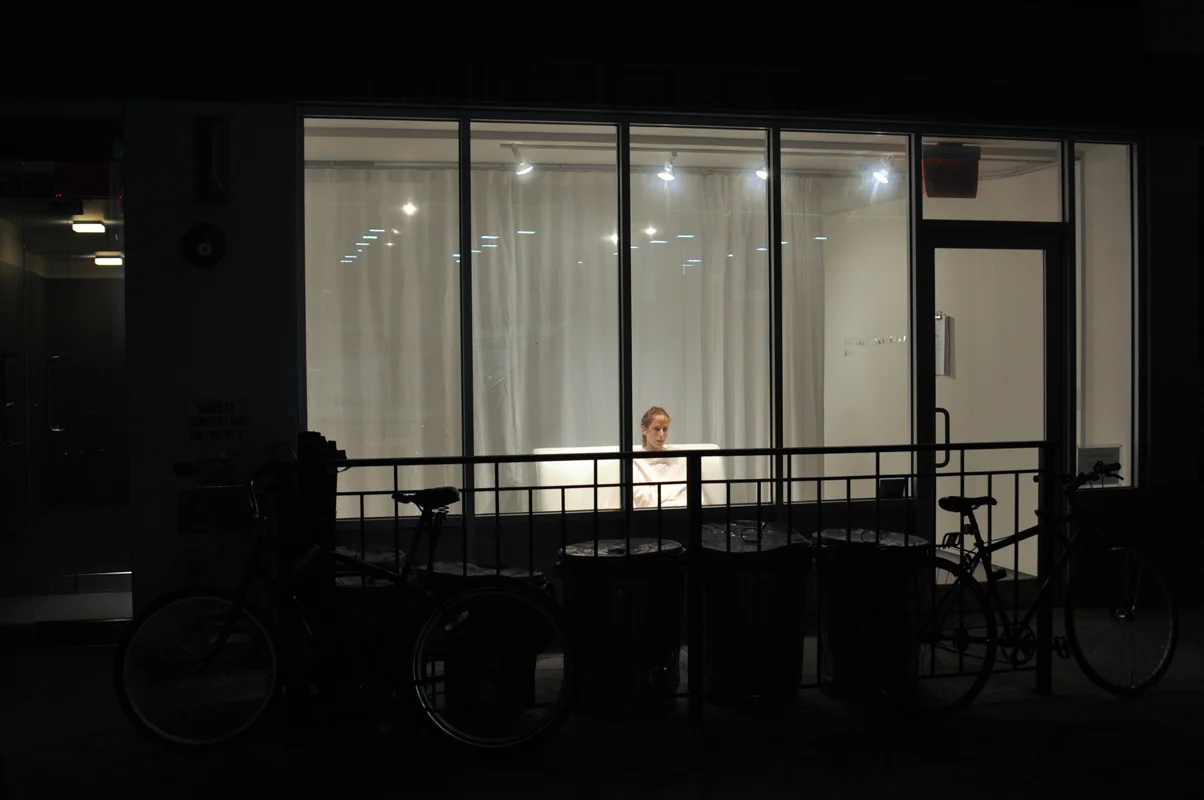
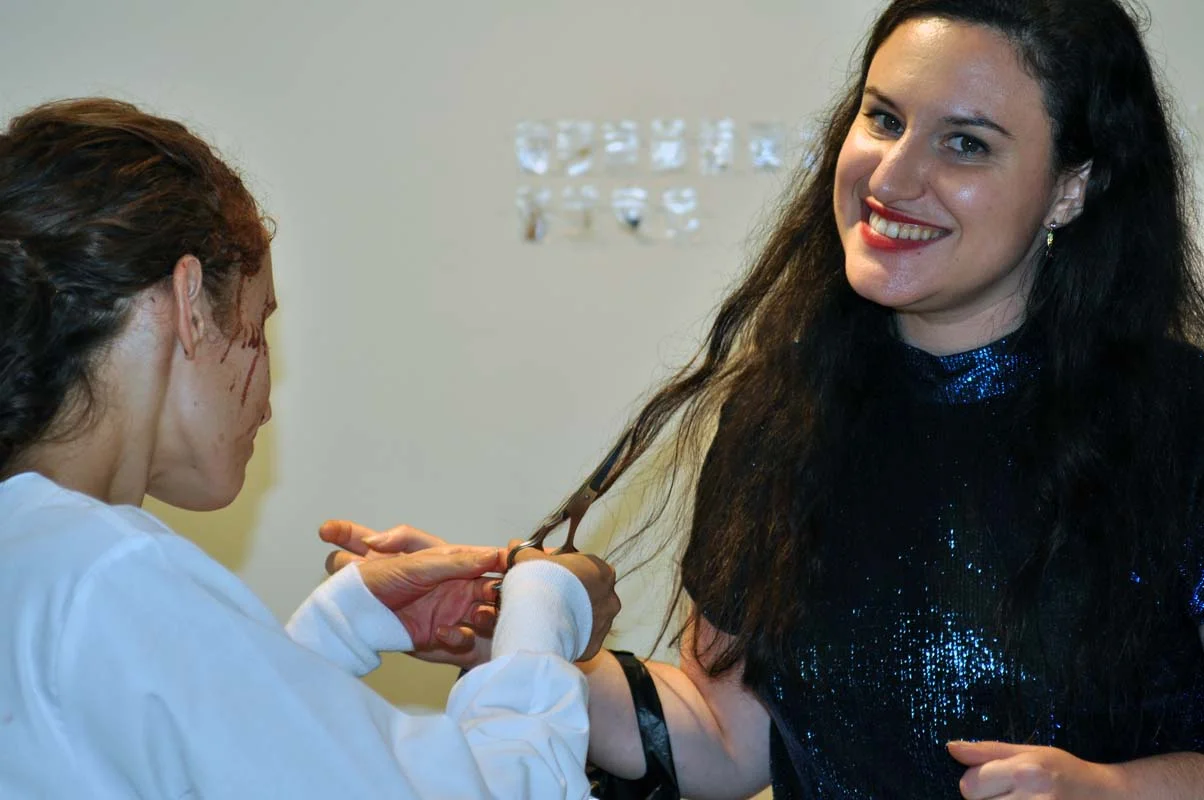

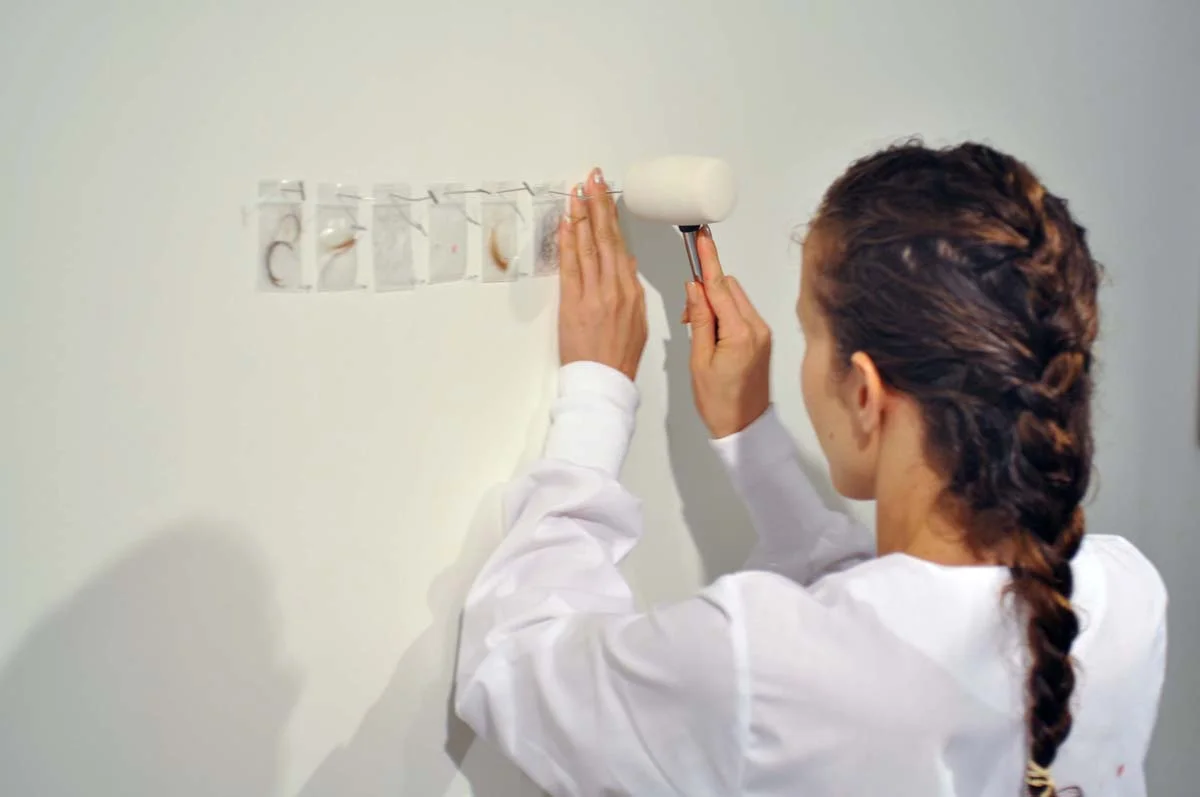
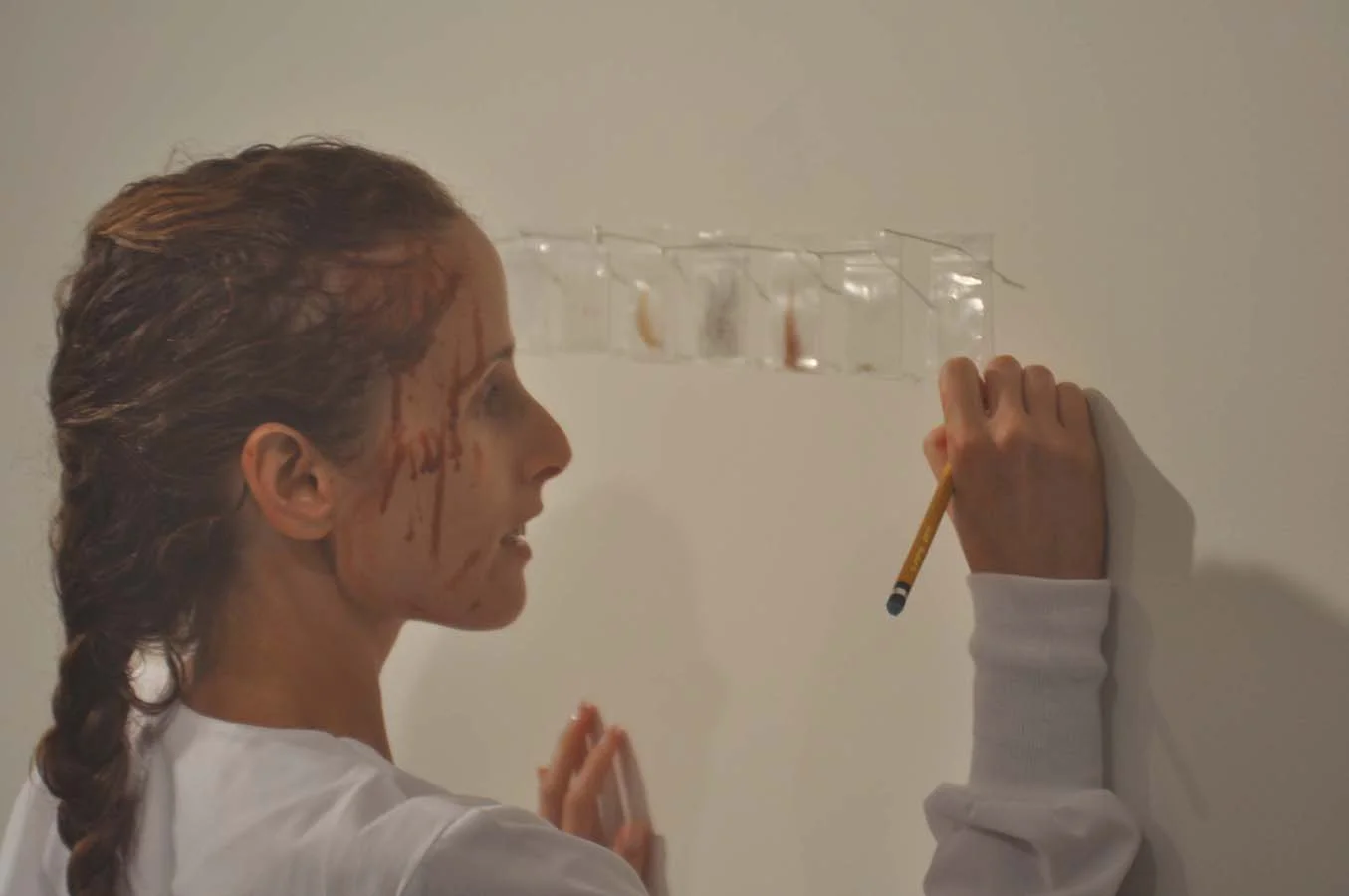

The upper floor was transformed into a laboratory space. The three pedestals, which only a week earlier had hosted the sharing of warm, comforting soup, were now the bed for laboratory tools: an aluminum tray holding tweezers, scissors, and nail clippers; a clear container with alcohol swabs; and another with small plastic bags and sterile gloves. On another pedestal, metallic office nails, a reflex hammer, and a pencil were displayed; small plastic tubes with a seal were arranged on another pedestal by a curtain-sectioned area.
Signs on the pedestals stated: "hair; nails; semen; saliva; collection; public exhibit".
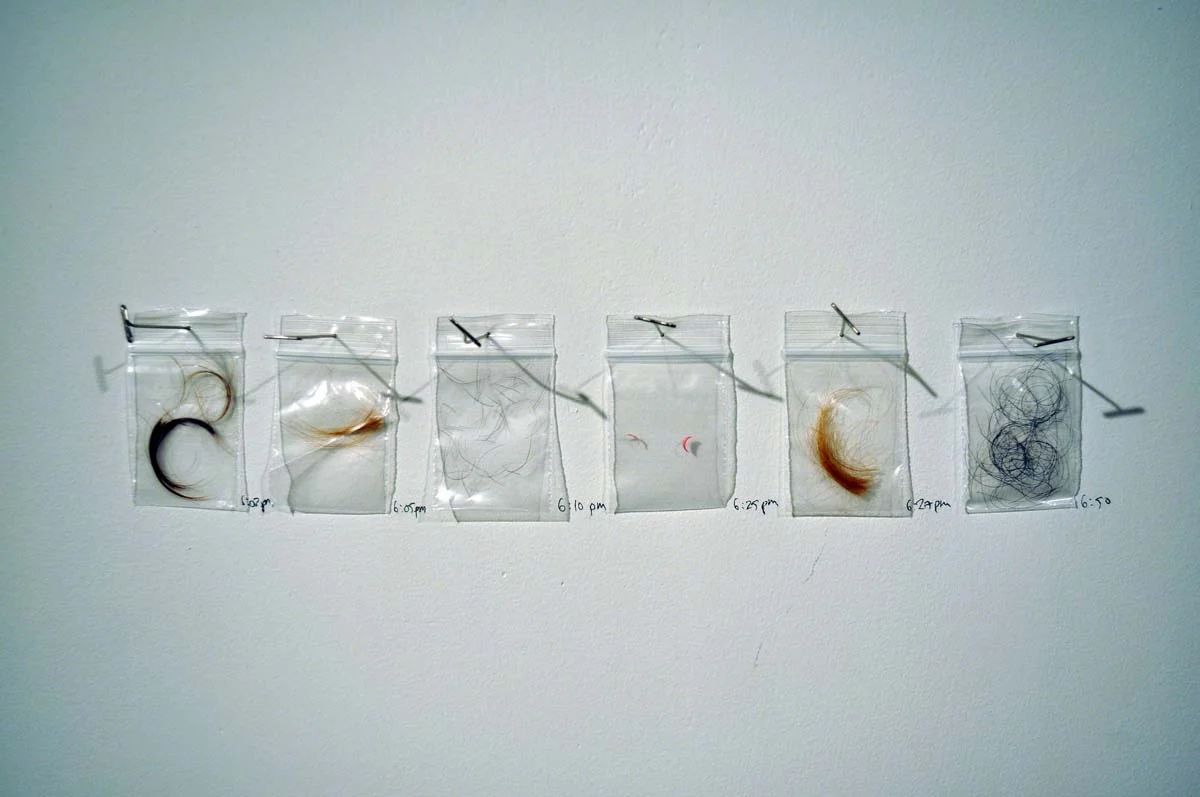
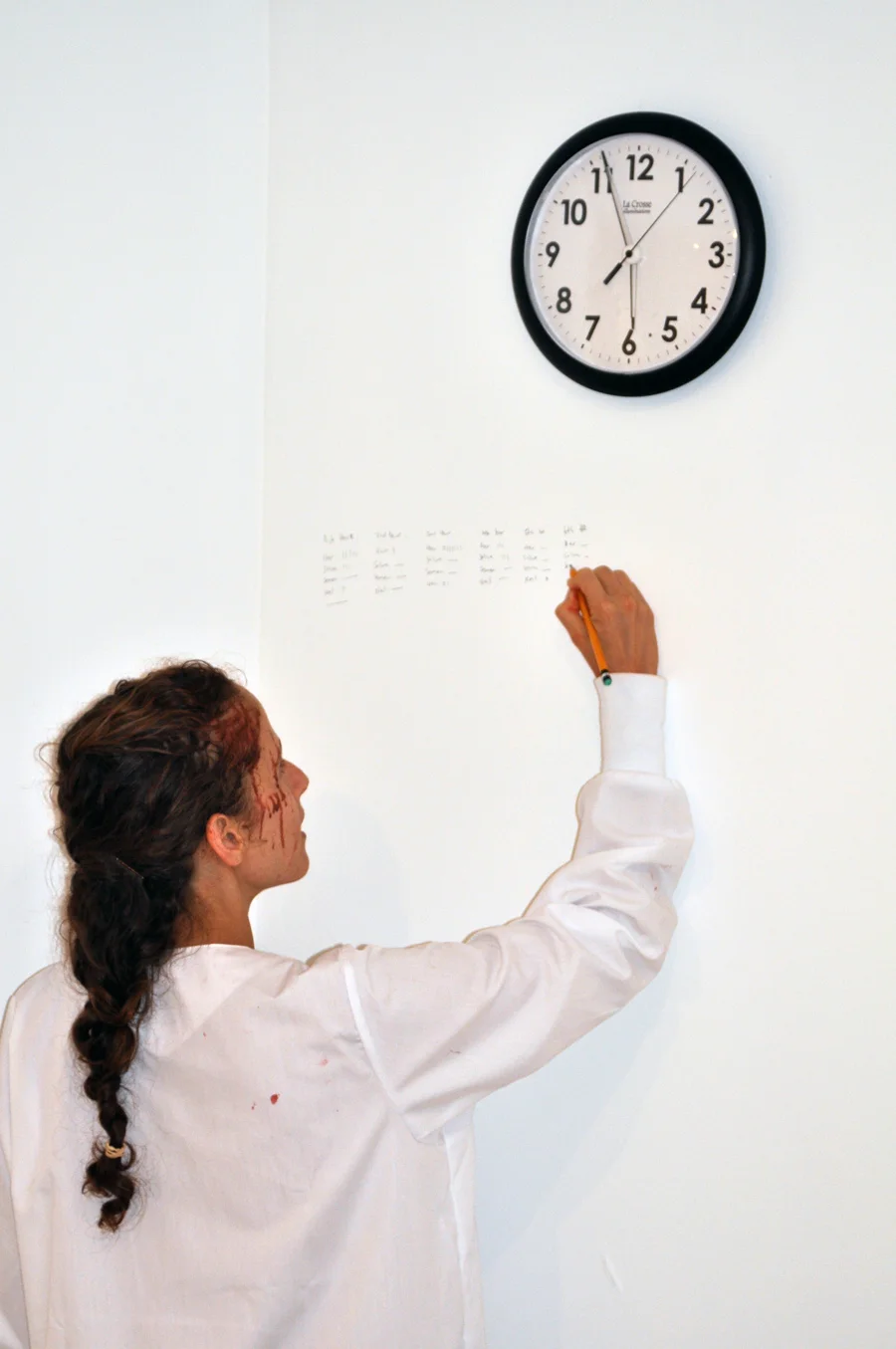
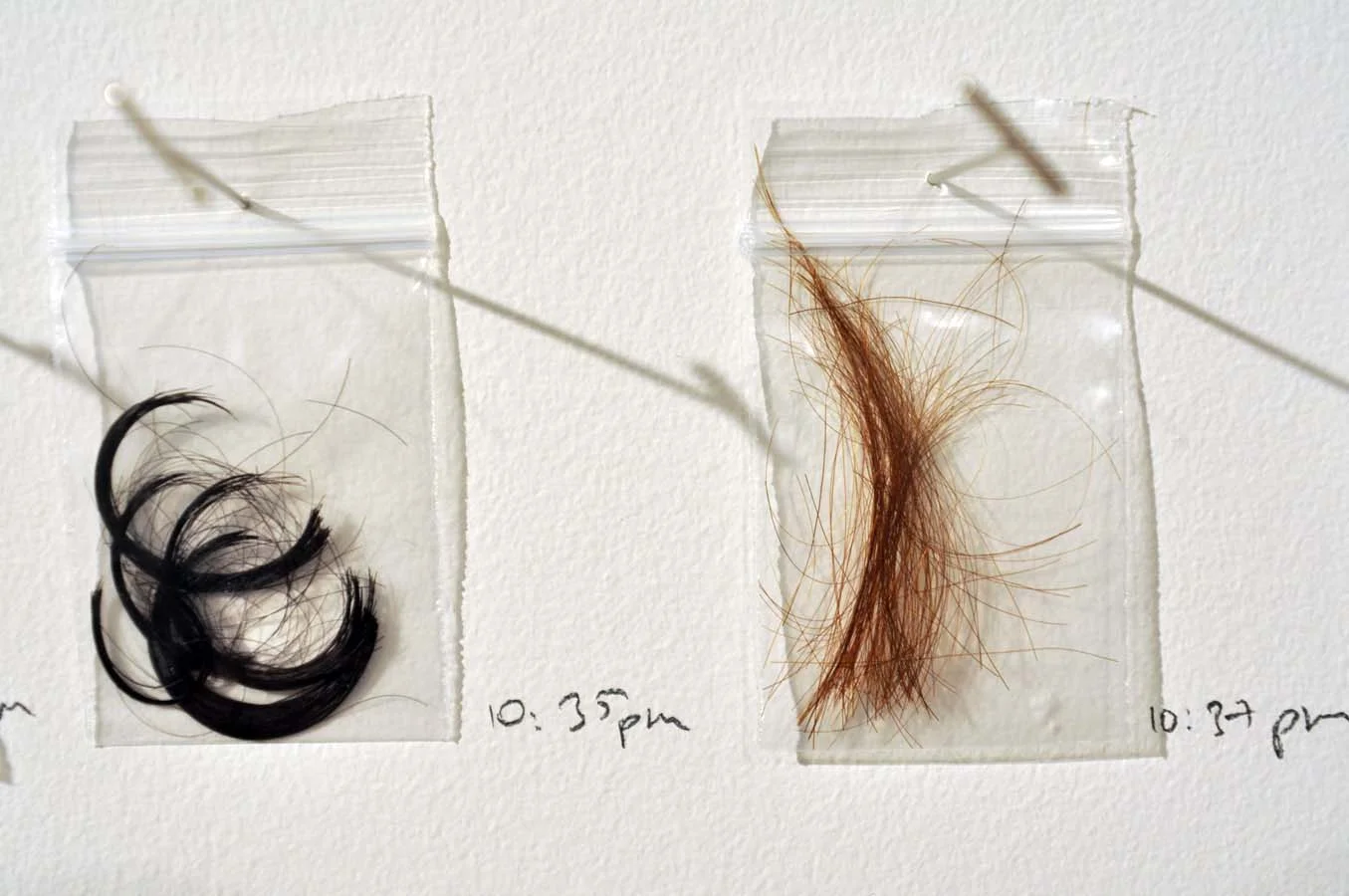
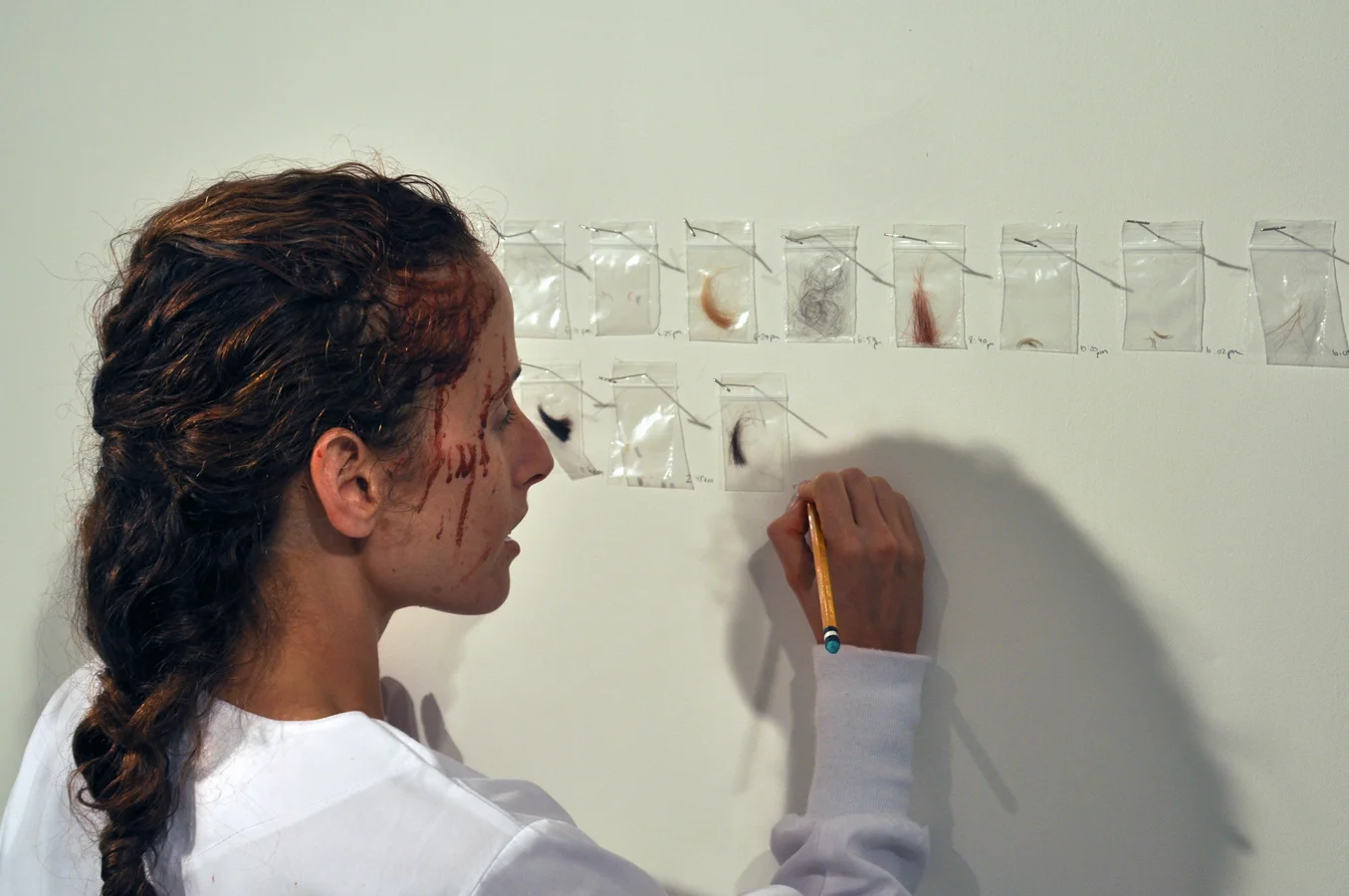
Lital stood in the space wearing a white lab coat, gathering DNA from willing attendees. Hair and nails were collected into small bags, semen and saliva into plastic jars.
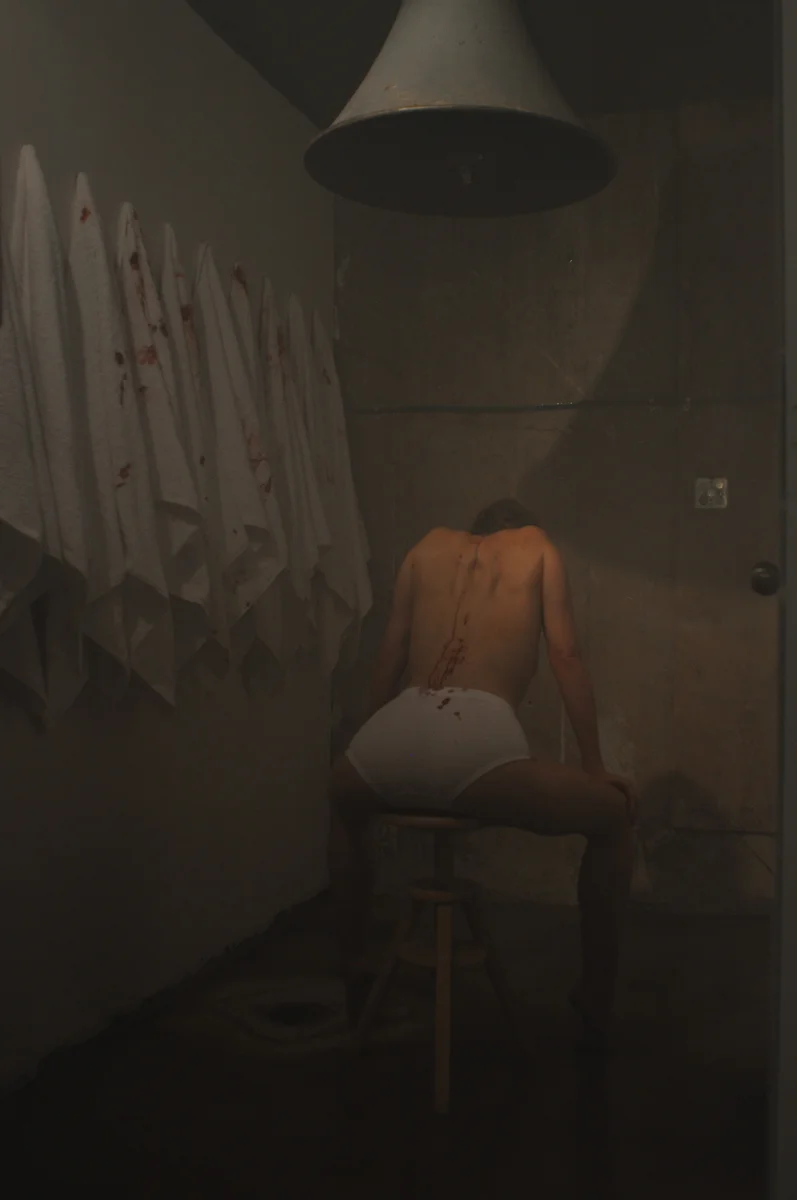
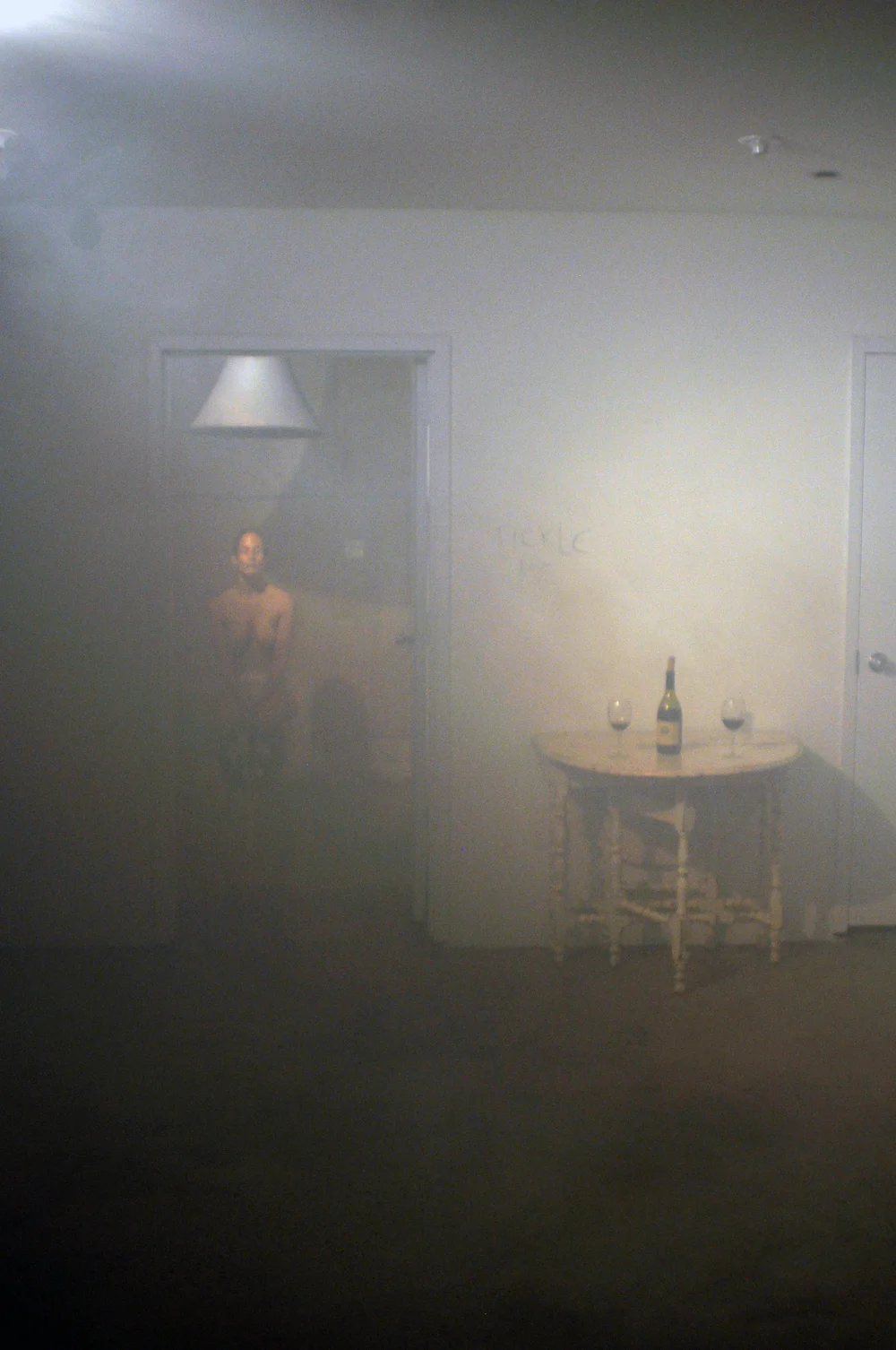
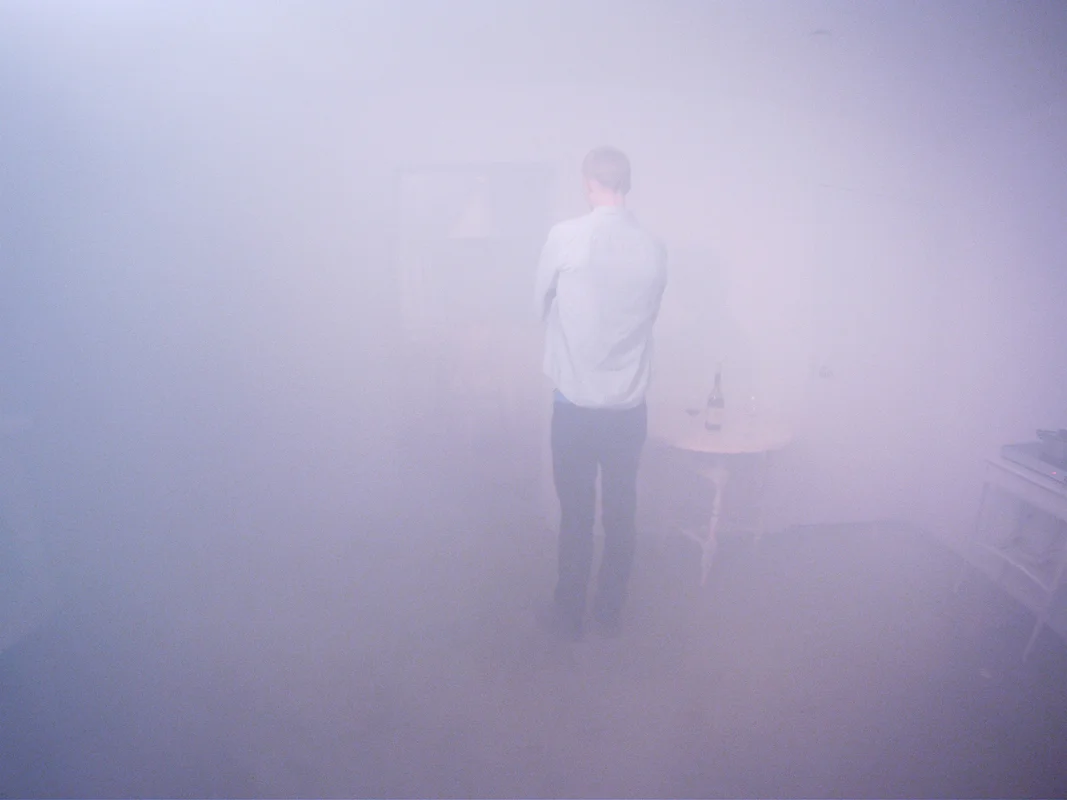
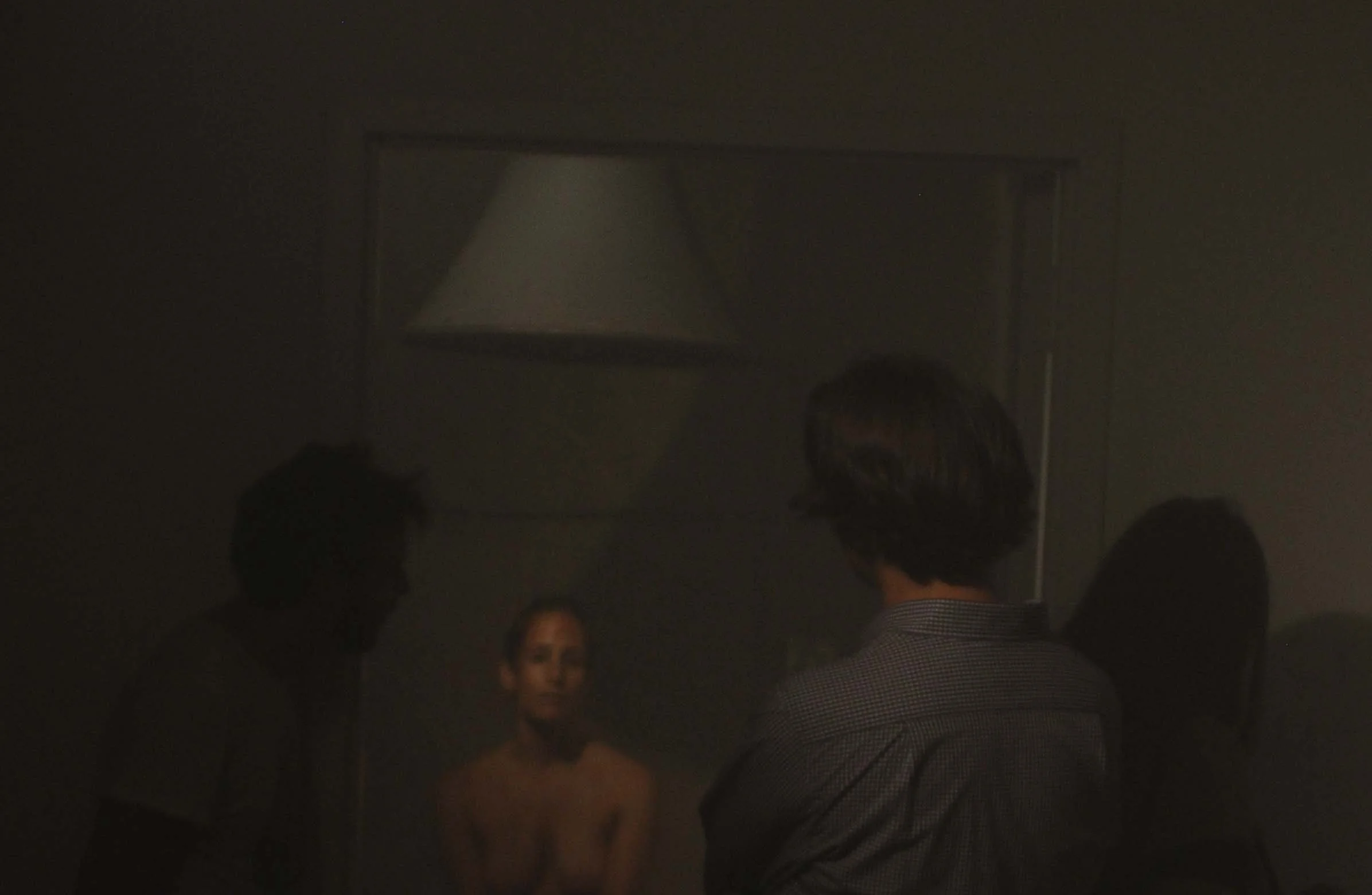
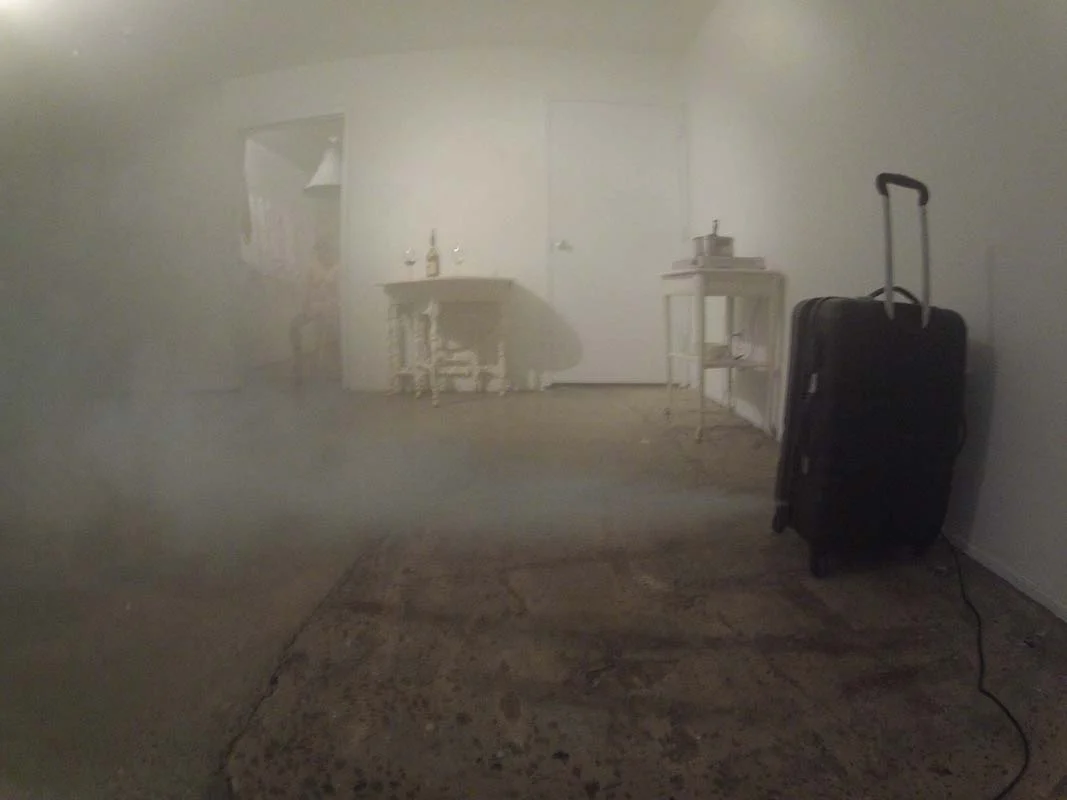
She labeled each donation with the time it was given, an anonymous donation to what would become our accumulating public collection. Plastic bags were pinned to the wall, plastic cups placed back on the pedestal. What separated the used from the unused was a label. Every hour on the hour, Lital left the lab for the downstairs area. She turned the smoke machine on, entered "The Cell" (originally a small storage room), and sat under a hung vintage public announcement speaker. Paced drips of blood provided the silent rhythm for the act. When the hour ended, Lital would take a white towel, one of 12 that were hung on the cell wall, clean the blood from herself and the floor, hang it back on the wall, and go upstairs to her lab to perform hospitality for another hour.