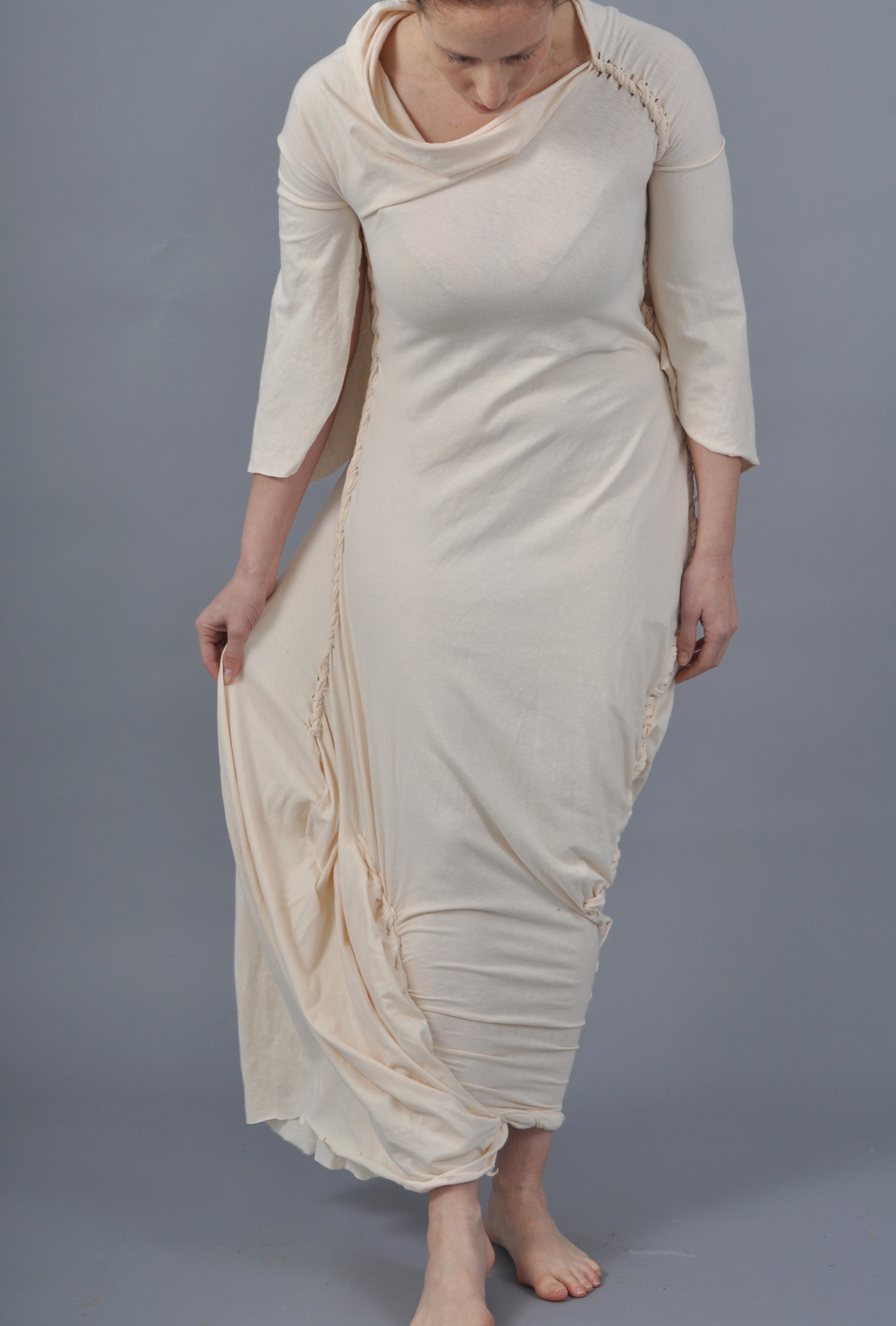
A Woman of Goodly Form
Seven Raiments of Captivity/ A Woman of Goodly Form (2017)
Conversation with ancient scriptures
What I mostly remember from studying Torah as a kid is the repeated question in exams- “who told whom and in what context”. We would memorize entire conversations and then learn the “Midrash” (the commentaries on these scriptures) and Mishnah (which is based on oral history). These interpretations also often got “lost in translation”, with contradicting meanings to the original scripture and commentaries in different dialects (Hebrew was not a practiced everyday language until it was revived at the end of the 19th century). I still sometimes get lost in this practice of interpretation. The text below is a morally complicated one- it deals with warfare rules regarding captive women in battle. It is horrific in modern eyes, yet it gives a glimpse of what the “unregulated" past looked like.
“10 “When you go out to war against your enemies, and the Lord your God gives them into your hand and you take them captive, 11 and you see among the captives a beautiful woman, and you desire to take her to be your wife, 12 and you bring her home to your house, she shall shave her head and pare her nails. 13 And she shall take off the clothes in which she was captured and shall remain in your house and lament her father and her mother a full month. After that you may go in to her and be her husband, and she shall be your wife. 14 But if you no longer delight in her, you shall let her go where she wants. But you shall not sell her for money, nor shall you treat her as a slave, since you have humiliated her.”
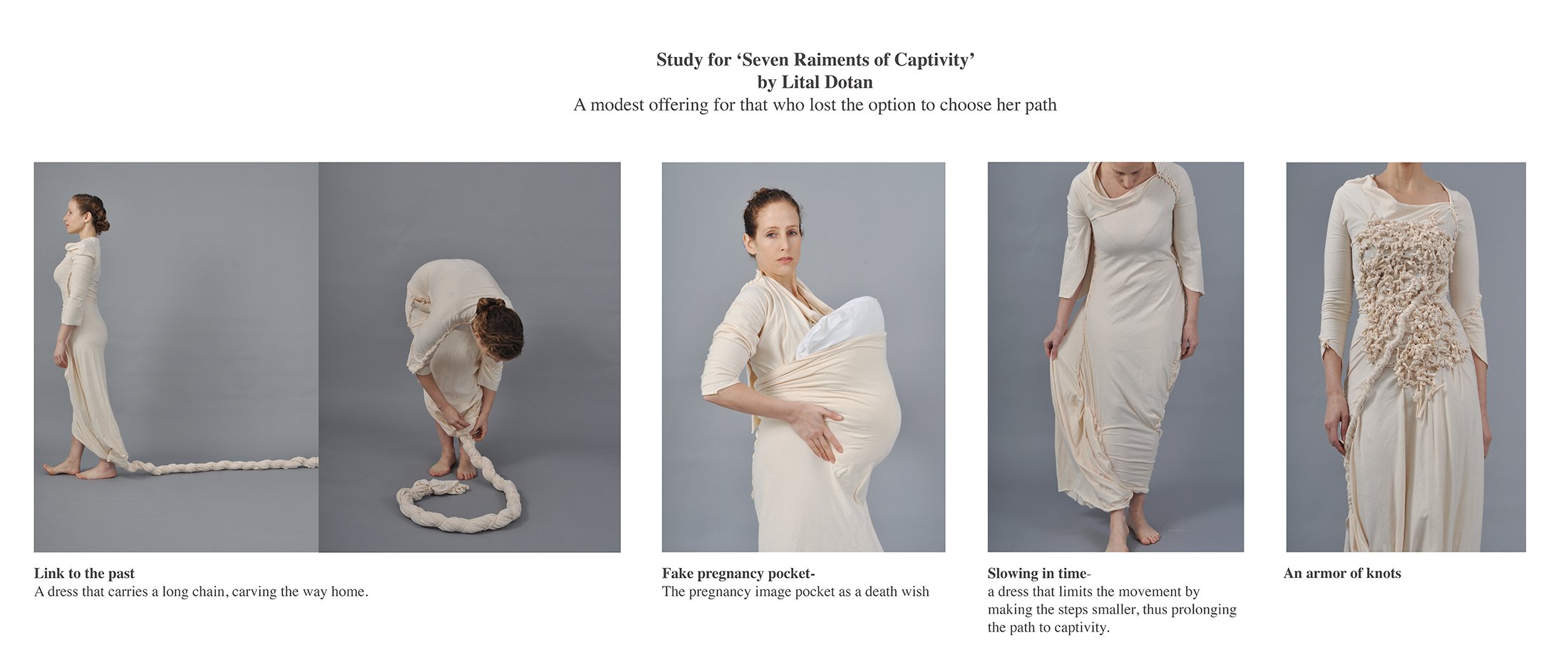
A WOMAN OF A GOODLY FORM is that who is picked to be taken captive. She is taken as loot, coveted. Stolen from her identity, but saved from death and torture which is the potential fate of the “unpicked”. Her route to the home of her captor would be her path to losing her self. The phrase ‘her captivity dress’ (Deuteronomy, Chapter 21, 13) inspired me to create a collection of seven garments, as offering of some potential personal choices in a state of complete loss. The captivity dress is a dress of transition, it is ephemeral, relevant only for a single path- the walk to the captor’s home. It is her remnants, her ritual, her will to carry on. Once she arrives at her new home she is to shave her head, pare her nails and take her captivity dress off. Each of the Seven Raiments of Captivity I designed offers a different choreography of movement in an unfamiliar given route. In a situation of complete loss, it is giving the captive the power to choose how she would like to walk towards her unchosen fate.
The seven dresses are:
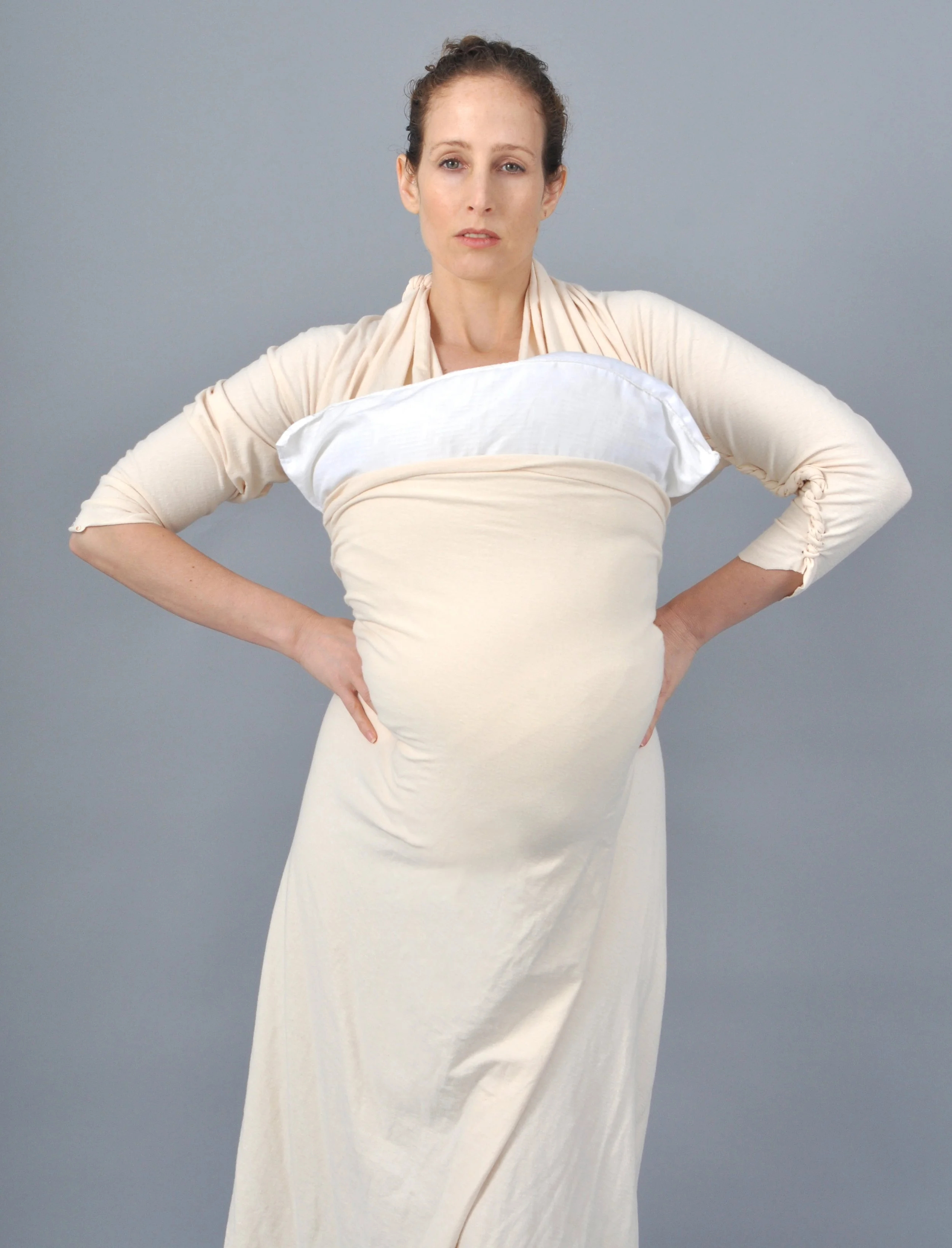
1. Fake pregnancy pocket- pregnant women would most likely not be chosen for captivity. The fake pregnancy pocket as a death wish.
2. Slowing in time- a dress that limits the movement by making the steps smaller, thus prolonging the path to captivity.
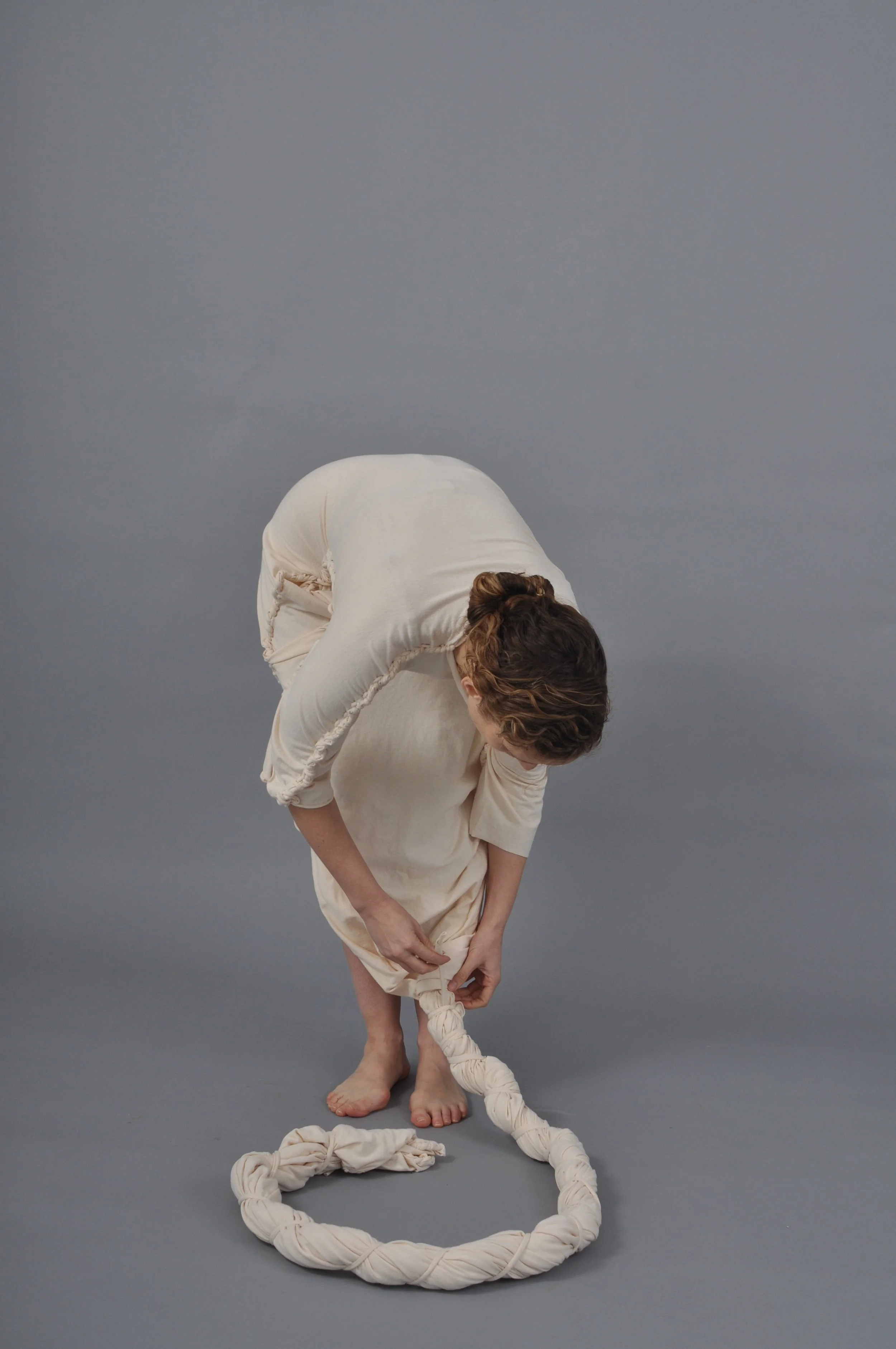
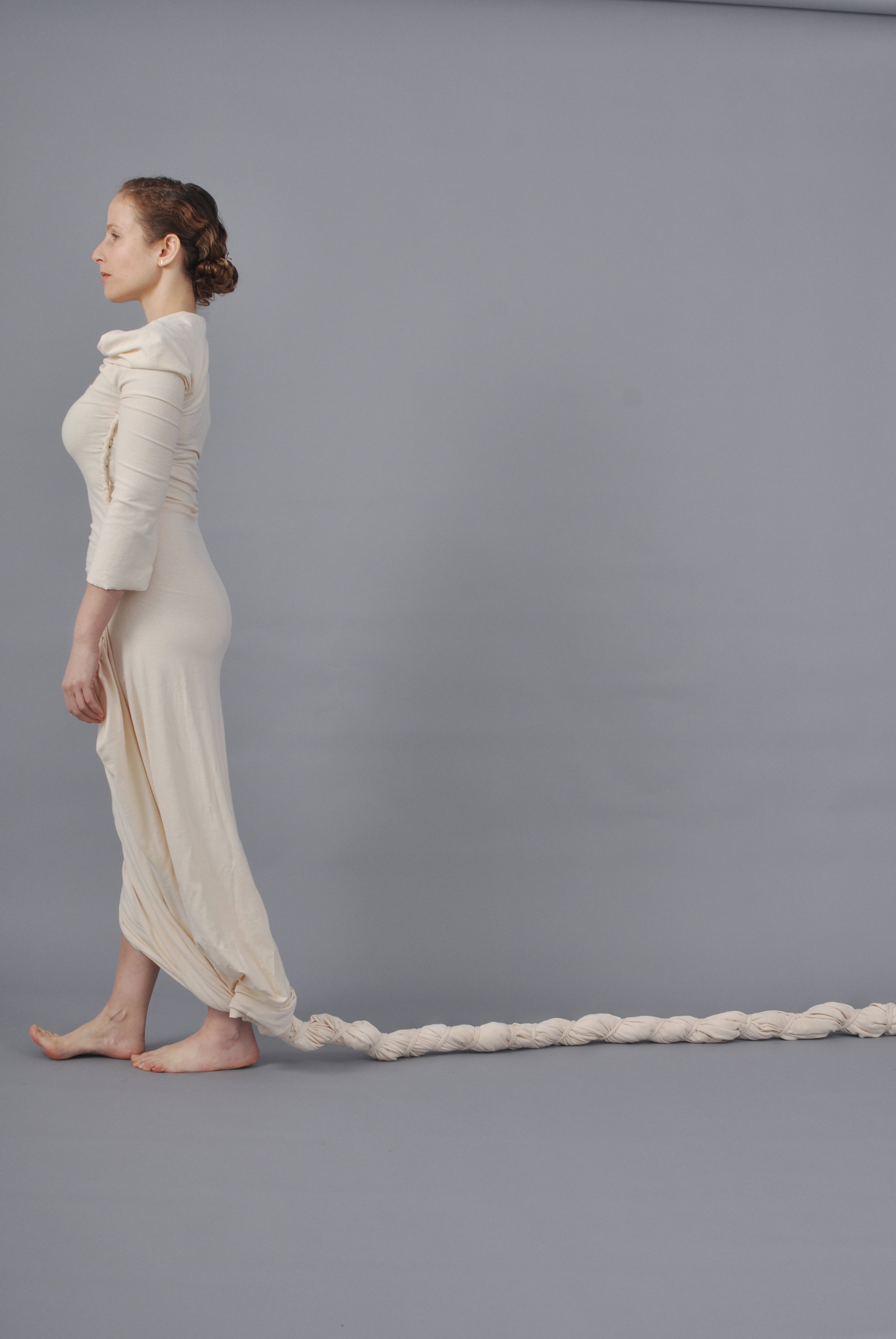
3. Link to the past- A dress that carries a long chain, carving the way home.
4. Forms of symbolic restriction (dresses that restrict and shape movement)
5. Head garment- heavyweight garment that needs balancing (focusing on something else)
6. Journal dress- dress with a hidden scroll- the life story of the wearer
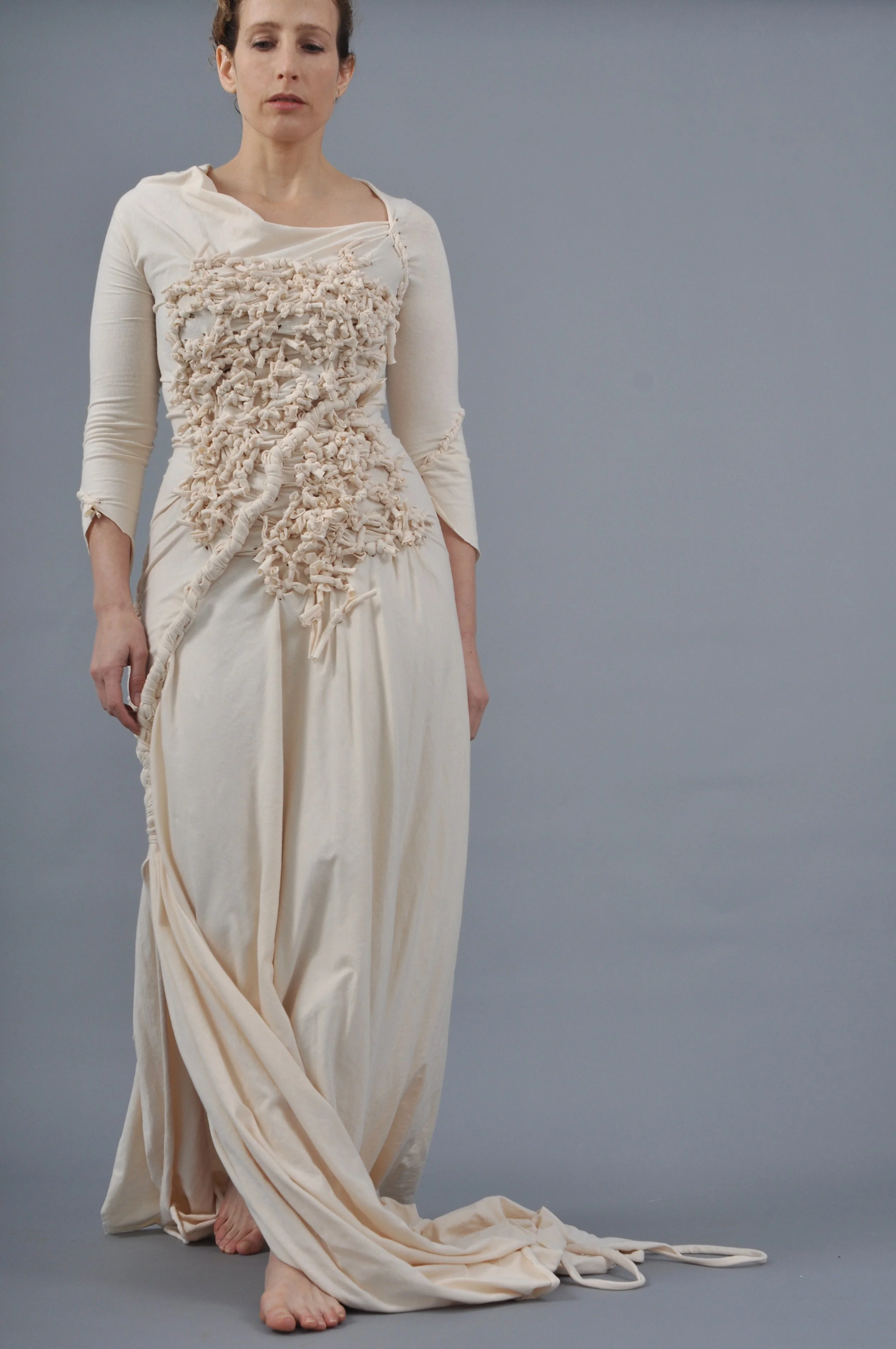
7. An armor of knots